Amazon Online Shopping in South Africa: Is Amazon Cheaper Than Takealot in 2026? A Seller’s Guide to Pricing and Profit
Choosing where to shop online in South Africa is no longer just about finding the lowest product price. Consumers also compare delivery fees, product availability, delivery speed, return policies, and the overall shopping experience. As Amazon.co.za continues to compete with established marketplaces such as Takealot, shoppers have more options—but deciding which platform offers the best value can be surprisingly complicated.
For e-commerce sellers, this competition raises an even more important question: How can you offer competitive prices without sacrificing your profit margins?
A product that sells well on one marketplace may struggle on another because of differences in customer demand, fulfilment costs, platform fees, and competitor pricing. Simply lowering your prices to win more orders can leave your business with less profit, even when sales volumes increase.
The solution is to look beyond individual product prices and understand the numbers behind every sale.
In this guide, we explore Amazon online shopping in South Africa, compare Amazon and Takealot from a practical perspective, and explain how e-commerce sellers can use pricing data, competitor analysis, and better operational decisions to build a more profitable business in 2026.
Amazon Online Shopping in South Africa: Is Amazon Cheaper Than Takealot?
Amazon and Takealot are important options for South African online shoppers, but neither platform is automatically cheaper for every product. The better choice depends on what you buy, the seller offering it, delivery costs, and any available promotions.
Amazon vs Takealot: What Should Shoppers Compare?
When comparing Amazon online shopping with Takealot, it is tempting to look only at the displayed product price. However, the amount paid at checkout can tell a different story.
Consider these five factors:
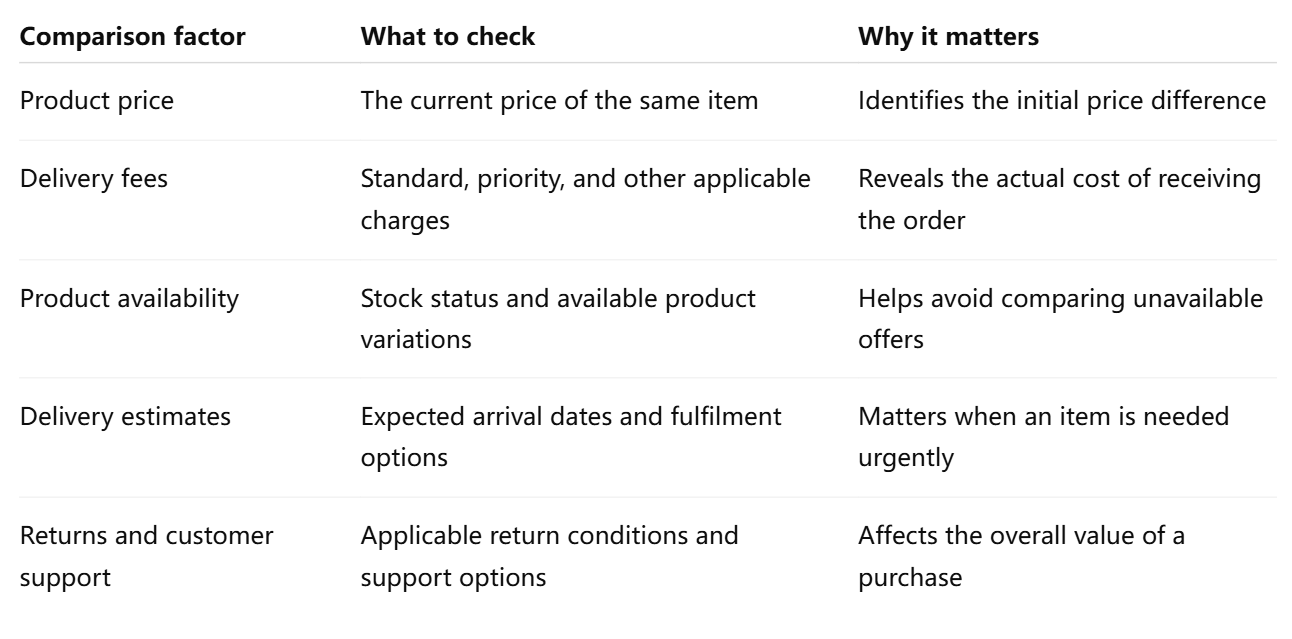
For example, suppose a kitchen appliance costs R799 on Amazon and R829 on Takealot. Amazon initially appears to offer the better deal.
However, if the Amazon listing has an additional delivery charge of R70 while the Takealot order qualifies for free delivery, the total cost becomes R869 on Amazon versus R829 on Takealot.
In this example, Takealot is R40 cheaper overall.
The lesson is simple: compare the final checkout price rather than relying on the product price alone.
Delivery conditions can also change. In 2026, South African e-commerce retailers have continued to adjust delivery fees and free-delivery thresholds in response to fulfilment costs. Always check the latest terms on the relevant marketplace before making a purchasing decision.
Why Amazon Online Shopping Is Attracting Attention
Amazon offers South African shoppers access to a growing marketplace of products, multiple sellers, customer reviews, and different fulfilment options.
For shoppers, this can make product discovery and price comparison more convenient. For sellers, it creates opportunities to reach customers who may not otherwise encounter their brands.
However, greater competition also makes it harder to rely on a single pricing strategy.
A seller may face competing offers from several businesses selling similar products. Even when the products are nearly identical, differences in delivery promises, stock availability, product presentation, and customer reviews can influence which offer shoppers choose.
This means the lowest price does not necessarily win every sale.
Sellers should also remember that consumer prices and seller costs are different things. A product that looks inexpensive to a shopper may still generate an attractive margin for one business and a loss for another, depending on sourcing costs, fees, advertising expenses, and fulfilment arrangements.
Understanding these differences is essential for businesses selling across multiple e-commerce marketplaces.
Amazon Online Shopping Trends: How South African Sellers Can Compete on Price and Profit
The growing interest in Amazon online shopping creates opportunities for local sellers, but entering a competitive marketplace requires more than uploading products and waiting for orders.
Successful sellers need to understand customer demand, monitor competitor behaviour, manage inventory, and calculate profitability at the individual product level.
Understand Your True E-commerce Profit Margins
One of the most common pricing mistakes is calculating profit using only the selling price minus the product's purchase cost.
In reality, an online order can involve several expenses, including marketplace commissions, fulfilment, packaging, advertising, storage, returns, and applicable taxes.
Consider the following illustrative example for a product sold at R500.
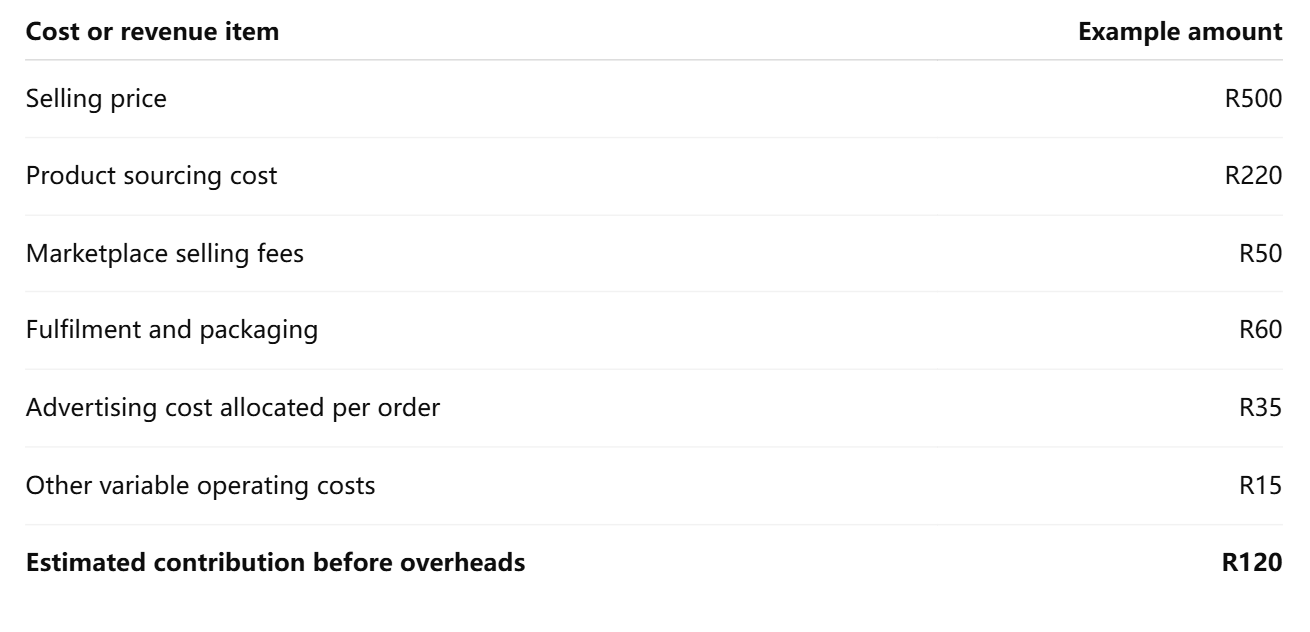
In this example, the seller retains R120 before fixed overheads and any additional expenses not included above.
If the seller reduces the price from R500 to R450 while all other costs remain unchanged, the contribution falls to R70.
That is a reduction of approximately 42%, even though the selling price has decreased by only 10%.
This illustrates why price reductions must be evaluated against their impact on profitability.
Amazon's South African seller programme includes different selling plans, referral fees, and fulfilment options. The applicable costs depend on the seller's plan, product category, and chosen fulfilment method. Temporary promotions may also change the economics of selling.
Before setting a price, review the current Amazon South Africa selling fee schedule and calculate your expected costs using the relevant fulfilment option.
For a useful pricing model, sellers should track at least three figures for every product:
- Contribution per order: Revenue remaining after the variable costs associated with a sale.
- Contribution margin: Contribution divided by selling revenue, expressed as a percentage.
- Break-even selling price: The minimum price required to cover the relevant costs, given the seller's pricing assumptions.
These figures help you decide whether a promotion, price reduction, or advertising campaign is financially worthwhile.
Use Competitor Pricing Data to Make Better Decisions
Monitoring competitor prices is particularly important when multiple sellers offer comparable products.
However, effective competitor price monitoring involves more than checking a listing once a week.
Prices can change in response to promotions, inventory levels, seasonal demand, advertising campaigns, and competitors entering or leaving the market. A seller who reacts to every temporary price reduction may end up changing prices unnecessarily.
A better approach is to establish a repeatable process.
First, identify your closest competitors. Focus on products that genuinely compete with yours in terms of specifications, quality, target customers, and fulfilment conditions.
Next, record the information that influences purchasing decisions. This may include selling prices, delivery estimates, promotional offers, stock availability, and customer ratings.
Then, compare the data with your own sales and cost information.
For example, if a competitor reduces its price by 8% but your product continues to sell at a healthy rate, immediately matching that reduction may not be necessary. Your product might have stronger reviews, better availability, or a more attractive delivery promise.
Conversely, if your conversion rate falls while competitors offer similar products at lower total prices, a pricing review may be justified.
The important point is to make pricing decisions based on evidence rather than assumptions.
Improve Inventory Management and Multi-Marketplace Performance
Pricing is only one part of profitable e-commerce operations.
A product can have an attractive margin but still underperform if it repeatedly goes out of stock. Excess inventory creates another problem by tying up working capital and increasing storage expenses.
For sellers operating across Amazon, Takealot, and their own online stores, inventory management becomes more complicated.
Different marketplaces may generate different sales volumes, and demand can change quickly during promotional periods.
To improve operational efficiency, sellers should monitor:
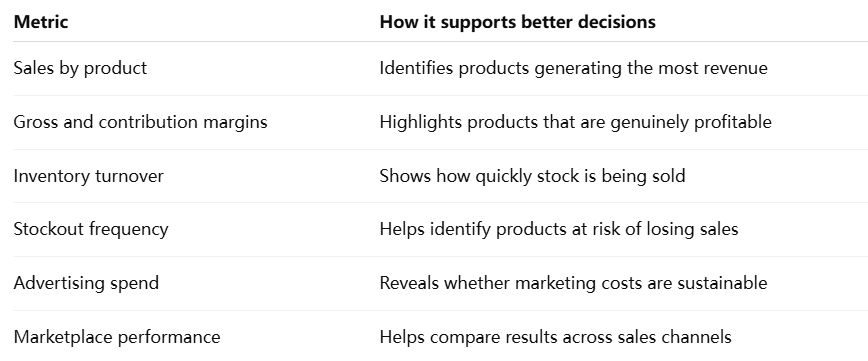
Tracking these metrics together gives sellers a more complete picture of business performance.
This is where e-commerce analytics tools can help. Instead of reviewing multiple spreadsheets and marketplace reports separately, sellers can use a structured reporting process to identify changes in sales, costs, stock levels, and profitability.
The goal is not simply to collect more data. It is to turn available data into decisions that improve business performance.
Amazon Online Shopping Insights: How Data Analytics Helps Sellers Grow in 2026
As competition increases, sellers need a reliable way to understand what is happening across their businesses.
Amazon online shopping trends can reveal changes in customer preferences and competitive behaviour, but sellers still need to connect those observations to their own sales, costs, and inventory data.
A competitor's discount, for example, is useful information. Knowing whether that discount affects your conversion rate or contribution margin is even more valuable.
Build a Data-Driven Pricing Strategy
A practical pricing strategy should balance competitiveness with profitability.
Rather than choosing one fixed price and leaving it unchanged indefinitely, establish pricing rules based on your costs, market conditions, and business objectives.
Start by calculating a minimum acceptable contribution margin for each product. This provides a financial boundary that helps prevent price reductions from undermining profitability.
Next, define the conditions that justify a pricing review. These might include a significant competitor price change, declining sales conversion, excess inventory, or an upcoming promotional period.
Finally, measure the results after making a change.
Suppose you reduce a product's price by 5% to improve competitiveness. After the adjustment, compare the number of orders, contribution per order, total contribution, and advertising costs with the previous period.
If sales increase but total contribution falls, the strategy may not be delivering the intended business benefit.
If sales increase while contribution remains healthy, the price adjustment may be worth maintaining.
This process turns pricing into an ongoing business decision rather than a series of reactive changes.
Use E-commerce Analytics to Identify Growth Opportunities
Data analytics can help sellers answer several practical questions:
Which products deserve more investment?
A high-revenue product is not always the most profitable. Reviewing contribution margins alongside sales volume can help identify products that generate sustainable returns.
Where are sales opportunities being missed?
Products with declining conversion rates, recurring stockouts, or uncompetitive total prices may need attention. Combining these indicators helps sellers prioritise the issues most likely to affect performance.
Which marketplace performs best for each product?
Comparing sales and profitability across Amazon, Takealot, and other channels can reveal where individual products perform most effectively. Comparisons should account for differences in marketplace fees, advertising, fulfilment, and other relevant costs.
How should inventory be allocated?
Historical sales, current stock levels, and expected demand can help sellers plan replenishment and reduce the risk of overstocking or running out of popular products.
These insights become more useful when sellers review them regularly and connect them to specific actions.
How Revenuealot Supports Smarter E-commerce Operations
For South African e-commerce sellers, managing pricing, sales, inventory, and performance across multiple channels can become time-consuming as a business grows.
Revenuealot, available at revenuealot.com, is positioned around a practical need: helping e-commerce businesses use data to understand performance and make better operational decisions.
A structured analytics workflow can help sellers move beyond isolated sales figures and focus on the metrics that matter to their businesses.
For example, sellers can use a data-driven approach to identify products that need a pricing review, investigate changes in sales performance, evaluate inventory risks, and compare marketplace results.
The specific reports, integrations, and automation capabilities available should be checked against Revenuealot's current product offering before selecting a solution.
Regardless of the tools used, the underlying principle remains the same: better decisions come from understanding the relationship between sales, costs, inventory, and customer behaviour.
As Amazon online shopping continues to evolve in South Africa, sellers who combine competitive pricing with disciplined cost management and reliable performance analysis will be better equipped to make informed decisions.
The objective is not to win every price comparison. It is to build a business that attracts customers while protecting sustainable profit margins.
Frequently Asked Questions (FAQ)
1. Is Amazon online shopping cheaper than Takealot in South Africa?
Not necessarily. The cheapest option depends on the product, seller, delivery charges, promotions, and return conditions. Compare the same product and calculate the final checkout cost before deciding which platform offers better value.
2. What should South African e-commerce sellers consider before selling on Amazon?
Sellers should evaluate product demand, sourcing costs, marketplace fees, fulfilment expenses, competition, inventory requirements, and expected profit margins. Reviewing the current Amazon South Africa seller fee schedule is an important starting point.
3. How can sellers compete with lower prices on Amazon and Takealot?
Start by calculating your minimum profitable price and monitoring relevant competitors. Consider product quality, customer reviews, availability, delivery options, and conversion rates before changing your prices. Avoid matching every discount if doing so would make an order unprofitable.
4. Why is competitor price monitoring important for e-commerce businesses?
Competitor price monitoring helps sellers understand market positioning, identify pricing changes, and evaluate whether their offers remain competitive. When combined with sales and cost data, it supports more informed decisions about promotions and profit margins.
5. How can e-commerce analytics tools help South African sellers increase profitability?
E-commerce analytics tools can help sellers monitor sales, assess product profitability, identify inventory risks, and compare marketplace performance. By connecting these insights to pricing and operational decisions, businesses can focus on sustainable growth rather than revenue alone.