
Makro Seller Portal Guide: Manage Orders, Fees&Profits
Running an online store on Makro Marketplace sounds straightforward until daily operations start piling up. I may have products selling well, yet still struggle with stock discrepancies, delayed order processing, unexpected marketplace fees, or payouts that do not match my sales figures. When I also sell through other channels, keeping prices, inventory, and performance data consistent becomes even harder.
I believe the real challenge is not simply learning how to use the Makro Seller Portal. It is understanding how to turn seller data into better operational decisions. For South African e-commerce businesses, that means monitoring orders, protecting profit margins, and identifying which products deserve more investment. Here is how I would approach the process.
1. Makro Seller Portal: How to Set Up and Manage My Store
I start by treating my Makro Seller Portal as an operational control centre rather than just a place to upload products. I need accurate account information, reliable inventory records, and a repeatable order management process before I can scale sales confidently.
Getting Started with My Makro Marketplace Seller Account
I begin by registering through the official Makro Marketplace Seller Portal. I prepare my business information, identification, address details, and banking information according to the current registration requirements.
After registration, I check my primary contact details, pickup address, and inventory locations. I pay particular attention to the pickup address because it determines where couriers collect eligible orders.
Managing Product Listings, Pricing, and Inventory
For every product, I verify the title, description, specifications, images, selling price, and available stock. I also check package dimensions and weight because inaccurate information can affect fulfilment arrangements and transport charges.
I recommend reviewing inventory daily for fast-moving products. If I sell the same SKU on multiple marketplaces, I maintain a central stock record and update channel availability promptly. This helps reduce overselling, cancellations, and customer dissatisfaction.
Building a Reliable Order Fulfilment Workflow
Makro supports different fulfilment arrangements, including Fulfilled by Seller (FBS) and Fulfilled by Makro (FBM). With FBS, I manage stock and prepare orders at my premises. With FBM, I send inventory to a Makro fulfilment centre, where Makro manages storage and fulfilment according to its service.
My daily checklist includes checking new orders, confirming stock, preparing parcels, generating the correct waybills, and monitoring delivery status. I also review the current seller service-level requirements to ensure that my workflow meets the platform's expectations.
2. Makro Seller Portal: How I Track Fees, Payments, and Profits
I never judge a product's performance by sales revenue alone. A product can generate substantial turnover while contributing very little profit after marketplace commissions, transport charges, product costs, and returns.
Understanding Makro Seller Fees and Commission Rates
According to Makro Marketplace's published Help Centre, the monthly platform fee is R230 including VAT for sellers with at least one active listing. Commission rates depend on the product category, while final-mile transport fees depend on factors including package size, weight, and fulfilment method.
These charges can materially affect profitability, especially for bulky or low-margin products. I therefore calculate the expected net return before setting a selling price.
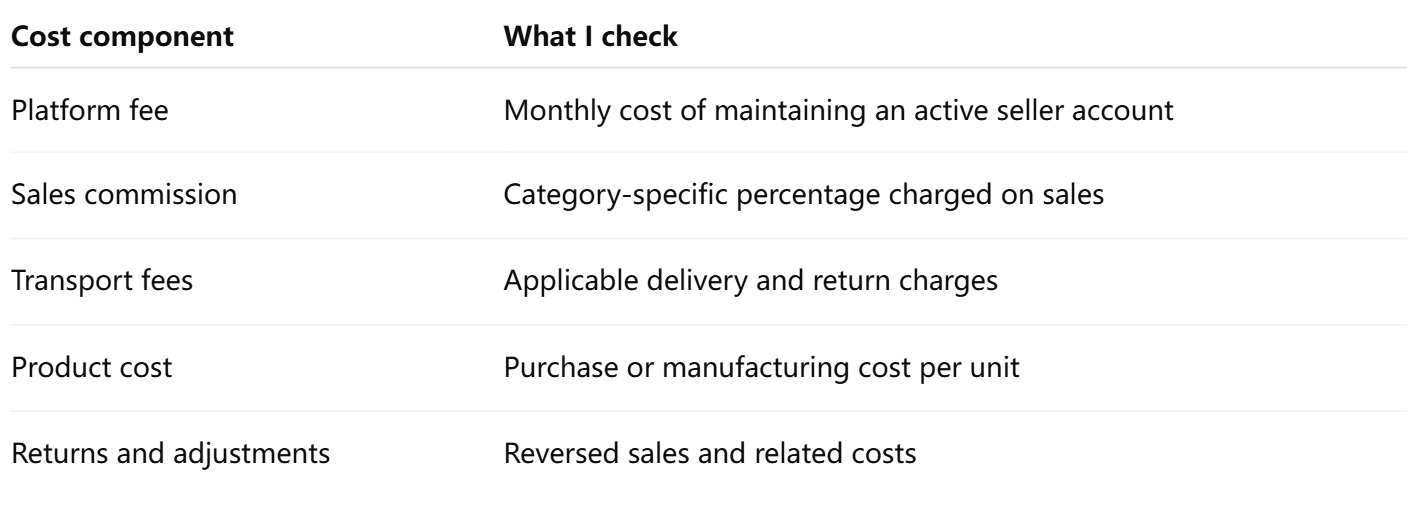
I use the official Makro Seller Fee Calculator to estimate applicable charges and expected payouts. I also verify current rates before making pricing decisions because marketplace fees and policies can change.
Tracking Orders, Returns, and Seller Payouts
I reconcile my order records against delivered orders, returns, and payment statements instead of assuming that every completed sale immediately becomes available cash.
Makro's current onboarding guidance describes two monthly payment runs based on delivery dates. Approved returns and outstanding fees can affect the final payout. I therefore compare my order data with remittance records and investigate discrepancies early.
Calculating My True Profit Per Product
My basic calculation is:
Estimated contribution per unit = Selling price − Product cost − Commission − Transport fees − Other variable costs.
For example, if I sell an item for R500, its product cost is R280, commission is R50, transport costs R60, and other variable costs total R20, my estimated contribution is R90 before allocating fixed overheads and applicable tax adjustments.
This calculation helps me compare products fairly. I can identify items that deserve promotional investment and those that require repricing or a different fulfilment strategy.
3. Makro Seller Portal: How I Use Data to Improve Performance
Managing daily tasks keeps my store running, but data analysis helps me decide what to improve next. I focus on measurable indicators rather than relying on sales volume or intuition alone.
Monitoring Sales Trends and Inventory Turnover
I review sales by SKU, revenue trends, stock availability, returns, and estimated contribution. When a product's sales increase, I check whether inventory can support the demand. When sales decline, I investigate pricing, product availability, listing quality, and competing offers before making changes.
I also monitor slow-moving inventory. Excess stock ties up working capital, while insufficient stock can cause missed sales. Reviewing historical sales alongside current inventory helps me make more informed replenishment decisions.
Using Multichannel Analytics to Make Better Decisions
If I sell on Makro alongside other marketplaces, I need a consolidated view of performance. Comparing sales, costs, stock levels, and product profitability across channels helps me understand where my business is performing best.
This is where I see value in Revenuealot. As a seller-focused analytics and operations solution, Revenuealot can help businesses approach marketplace performance through a more structured, data-driven workflow. I would evaluate its available integrations and reporting capabilities against my actual channels and reporting needs before choosing a solution.
The objective is straightforward: reduce manual spreadsheet work, identify performance gaps earlier, and make decisions using consistent data.
Practical Ways to Improve Operational Efficiency
I recommend starting with three improvements.
First, establish a daily review of new orders, inventory exceptions, and fulfilment issues. Second, reconcile marketplace fees and payouts regularly instead of waiting until month-end. Third, maintain a weekly performance report showing sales, estimated contribution, returns, and stock turnover by SKU.
These routines create a clear feedback loop. I can identify problems, make targeted changes, and measure whether those changes improve results without adding unnecessary complexity to my operations.
Frequently Asked Questions
1. What Is the Makro Seller Portal Used For?
The Makro Seller Portal allows marketplace sellers to manage their seller accounts, product listings, inventory, pricing, orders, and related operational information. Its available functions help sellers manage day-to-day marketplace activities.
2. How Do I Register for the Makro Seller Portal?
I start at the official Makro Marketplace seller website and follow the registration process. I prepare the requested business, identification, address, and banking details, complete my seller profile, and follow the platform's current onboarding requirements.
3. What Fees Do Makro Marketplace Sellers Pay?
Applicable fees can include a monthly platform fee, category-based sales commission, final-mile transport charges, and certain fulfilment or storage fees. I recommend checking the latest Help Centre guidance and Seller Fee Calculator because rates and conditions may change.
4. How Can I Track Orders and Payments in the Makro Seller Portal?
I review order statuses, delivery records, returns, and payment statements. I then reconcile eligible delivered orders against remittance records and investigate differences caused by returns, fees, or other adjustments.
5. Can I Use Revenuealot to Analyse My Makro Marketplace Performance?
Revenuealot focuses on e-commerce analytics and operational efficiency. Before relying on it for Makro reporting, I would confirm its current integration support, data availability, and reporting features. The right setup should help me understand sales performance, inventory, and profitability without assuming that every metric is automatically available.
Final takeaway: I see the Makro Seller Portal as the starting point for disciplined marketplace operations, not the complete answer to profitable growth. When I combine accurate listings, reliable fulfilment, careful fee reconciliation, and consistent performance analysis, I can make better-informed decisions and build a more sustainable e-commerce business in South Africa.