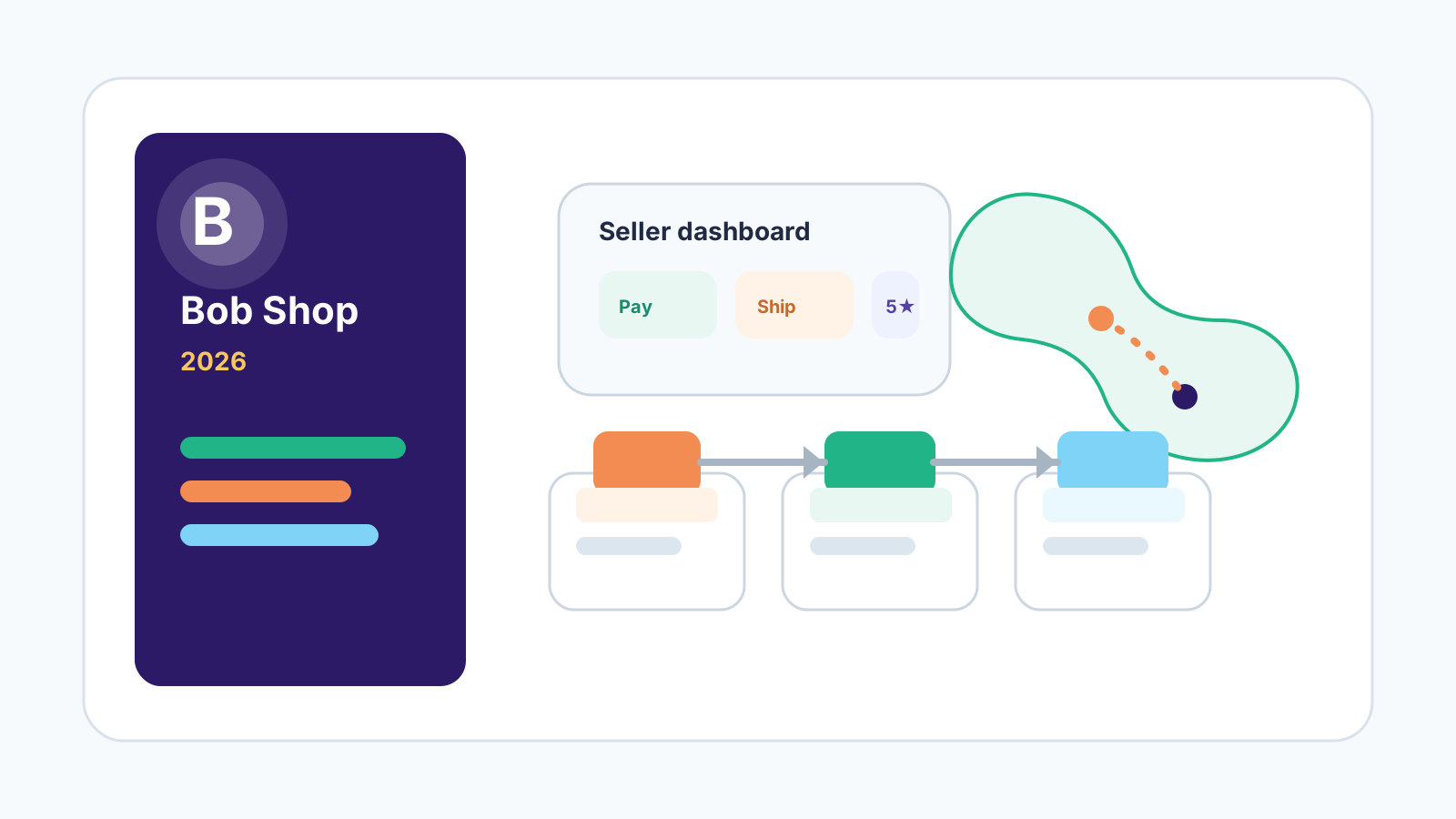
How to Start Selling on Bob Shop South Africa in 2026
Bob Shop South Africa is not a new marketplace, even though the name still feels newer than bidorbuy to many local buyers. Bob Shop is the rebranded bidorbuy marketplace, part of Bob Group after the Bob Shop and uAfrica merger in 2022, and the public rebrand was introduced in March 2023. As of March 25, 2026, it is one of the few South African ecommerce marketplaces where a small seller can still start lean, test auction or buy-now demand, and build a reputation before committing to a heavier marketplace operation.
That does not mean Bob Shop is effortless.
The platform rewards sellers who understand trust, payment flow, fees, shipping promises, and buyer expectations. It can work very well for local South African sellers with stock on hand, niche catalogues, refurbished products, accessories, collectibles, or price-sensitive ranges. It is less forgiving for sellers who upload imported goods without a delivery plan and hope buyers will tolerate vague lead times.
This Bob Shop seller guide is written from a seller's point of view. It explains how to sell on Bob Shop, where the fees really sit, how Basic Seller and Advanced Seller differ, how Bob Pay and shipping fit into cash flow, and when Bob Shop should sit beside Takealot, Amazon South Africa, or your own store.
What Bob Shop is in 2026
Bob Shop is a South Africa ecommerce marketplace built around flexible selling formats rather than one rigid retail model. Sellers can use auctions, buy-now listings, classified-style listings, and later more advanced seller tools. That makes it different from marketplaces where the product detail page and fulfilment model are tightly standardised from day one.
The official Bob site positions the broader Bob ecosystem around ecommerce, payments, shipping and lockers. Bob Shop's own public messaging highlights more than 3 million listed items, 30+ categories, 9 secure payment methods, 12+ courier partners, over 1 million transactions per month, and more than 20 years of trading history under the bidorbuy and Bob Shop lineage.
For a seller, those numbers matter in a practical way:
- there is already buyer habit around buying from independent sellers
- trust signals such as ratings and verification are central to conversion
- payment and courier choices are part of the marketplace proposition
- sellers can test demand before building a full storefront
Bob Shop is therefore best understood as a trust-led open marketplace. It is not a pure retailer, not a fulfilment-first platform, and not just a classifieds board. It sits between those models.
Bob Shop vs Takealot vs Amazon South Africa
The question is not whether Bob Shop is "better" than Takealot or Amazon. The better question is what job each marketplace should do in your channel mix.
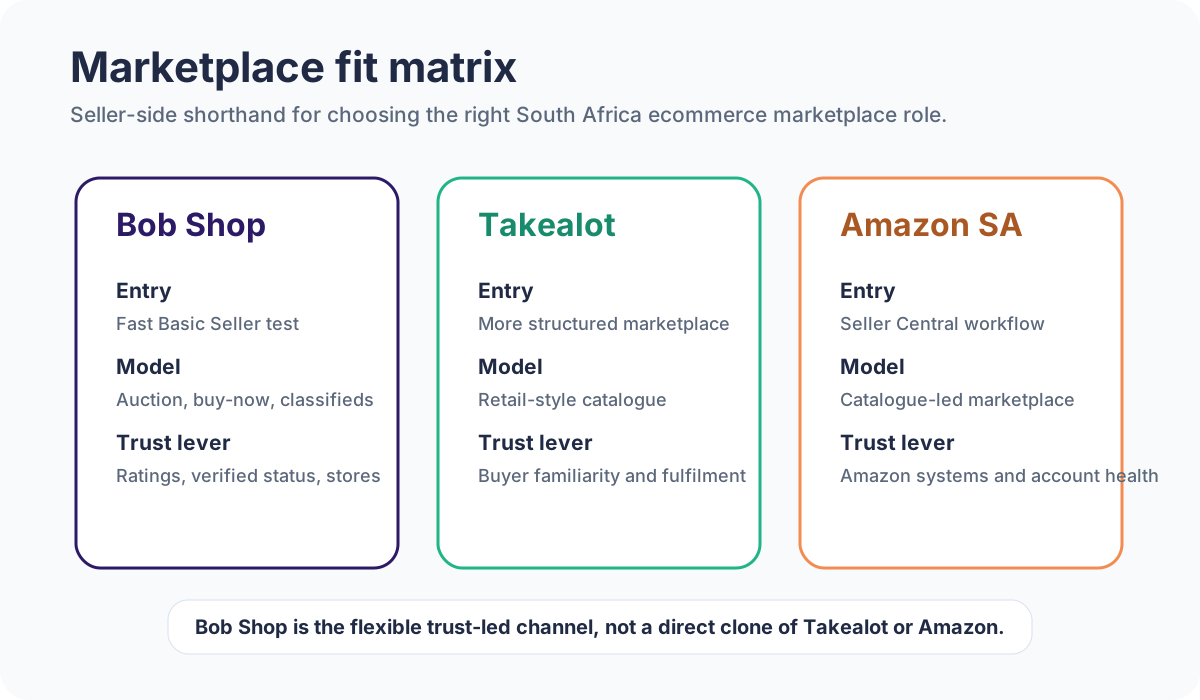
Platform | Seller-side role | Strength | Main risk |
|---|---|---|---|
Bob Shop | Flexible marketplace for auction, buy-now, niche, refurbished and long-tail products | Easier entry, visible seller ratings, multiple payment and listing formats | Trust and fulfilment are exposed at seller level |
Takealot | Mature retail-style marketplace benchmark for South African sellers | Strong buyer familiarity and local operating expectations | More standardised operations and competitive mainstream categories |
Amazon South Africa | Catalogue-led marketplace with global Amazon tooling | Long-term optionality and Seller Central familiarity | Still early locally compared with Takealot's local maturity |
If you want a deeper comparison of the two biggest mainstream platforms, read The 2026 E-commerce Battle: Amazon vs. Takealot. If you are also evaluating Amazon as a second marketplace, the companion guide How to Sell on Amazon South Africa in 2026 explains that route separately.
Bob Shop is strongest when you need flexibility. A seller with a niche range, limited quantities, used or refurbished goods, collectables, parts, accessories, or a price-testing strategy can often learn faster on Bob Shop than on a marketplace that expects a clean retail catalogue from day one.
Who should sell on Bob Shop
Bob Shop is a good first or second marketplace for South African sellers who can answer three questions clearly: what is in stock, how fast can it ship, and why should a buyer trust you?
You are a strong candidate if you already have:
- South African inventory or a reliable local supplier
- clear product photos, model numbers, specs and condition notes
- a courier plan that can meet the handling time you advertise
- the discipline to answer buyer questions quickly
- a margin model that includes marketplace fees, shipping and returns
- a category where shoppers compare price, condition, rarity or seller reputation
Bob Shop can also work for side sellers and small businesses that are not ready for a full Takealot or Amazon operating rhythm. A Basic Seller can start without bank or card verification, which lowers the barrier to testing. But the sellers who build durable revenue usually move beyond the first listing and treat ratings, fulfilment and buyer communication as operating assets.
Where Bob Shop is especially useful
The platform is particularly useful for products where search intent is specific rather than brand-polished. Examples include replacement parts, phone accessories, hobby products, refurbished electronics, collectibles, books, tools, specialty home goods, clearance stock, and limited-quantity imports already held in South Africa.
It is less ideal for sellers who cannot control delivery time, cannot answer buyer questions, or need a fully managed fulfilment service to make the unit economics work.
Basic Seller vs Advanced Seller
Bob Shop's seller registration begins with a practical split: Basic Seller and Advanced Seller. The official seller registration guide says a Basic Seller can start selling immediately, while Advanced Seller status requires extra verification and gives access to more tools.
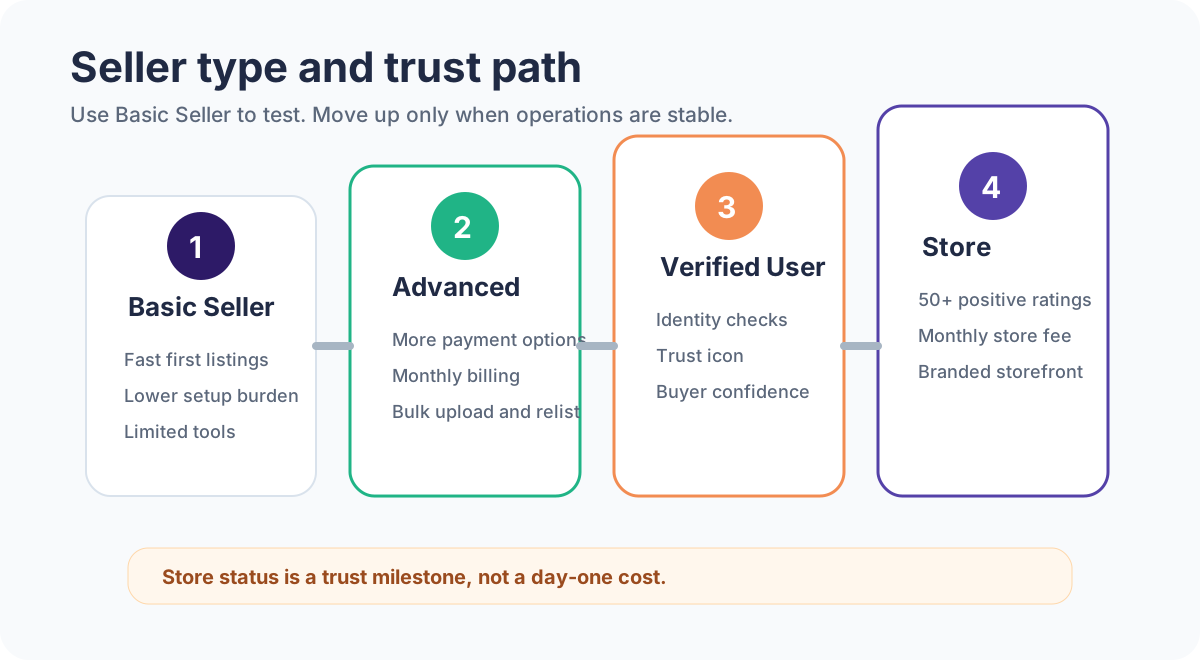
Area | Basic Seller | Advanced Seller |
|---|---|---|
Starting point | Fastest route to first listing | Better route for serious selling |
Bank or card details | Not required to start | Required for verification |
Validation | No advanced validation | Bob Shop may validate bank/card details and credit the validation amount back to the account |
Payment options | More limited | Can use all available payment methods |
Fees | Listing and enhancement fees are paid in advance | Monthly billing in arrears after invoice |
Tools | Good for testing | Enables broader listing enhancements, personal offers, automatic relisting and bulk upload workflows |
The practical advice is simple:
- Start as a Basic Seller if you want to validate demand with a handful of listings.
- Apply for Advanced Seller if you plan to list consistently, use richer payment options, or manage a bigger catalogue.
- Think about a Bob Shop Store only after you have ratings, stock depth and customer-service discipline.
Bob Shop Stores are a separate upgrade path. The official store options page lists monthly store fees from R500 to R1,000 depending on store tier, with a once-off setup fee. It also sets quality thresholds such as 50 positive ratings, a minimum number of concurrent listings, positive feedback requirements, and use of Bob Pay. A new seller should treat this as a milestone, not day-one overhead.
What South African sellers should prepare
The fastest way to slow down onboarding is to treat Bob Shop like a casual listing site. Even if Basic Seller entry is easy, your operating setup still needs to be clean.
Prepare the following before you list:
- a dedicated seller email and mobile number
- South African ID or business registration details, if you plan to verify or upgrade
- bank or credit card details for Advanced Seller verification
- VAT and tax position, especially if you already trade as a registered business
- product photos that show condition, packaging and included accessories
- SKU names, model numbers, item condition and warranty notes
- shipping defaults, handling time and return rules
- a first-response process for buyer questions and after-sales issues
For cross-border sellers, add one more layer: decide whether stock is already in South Africa. Bob Shop buyers may accept a longer wait if a listing is very clear, but the marketplace reputation system makes vague delivery promises risky. A China-based seller should usually test with local inventory, a South African fulfilment partner, or a small number of low-return products before scaling.
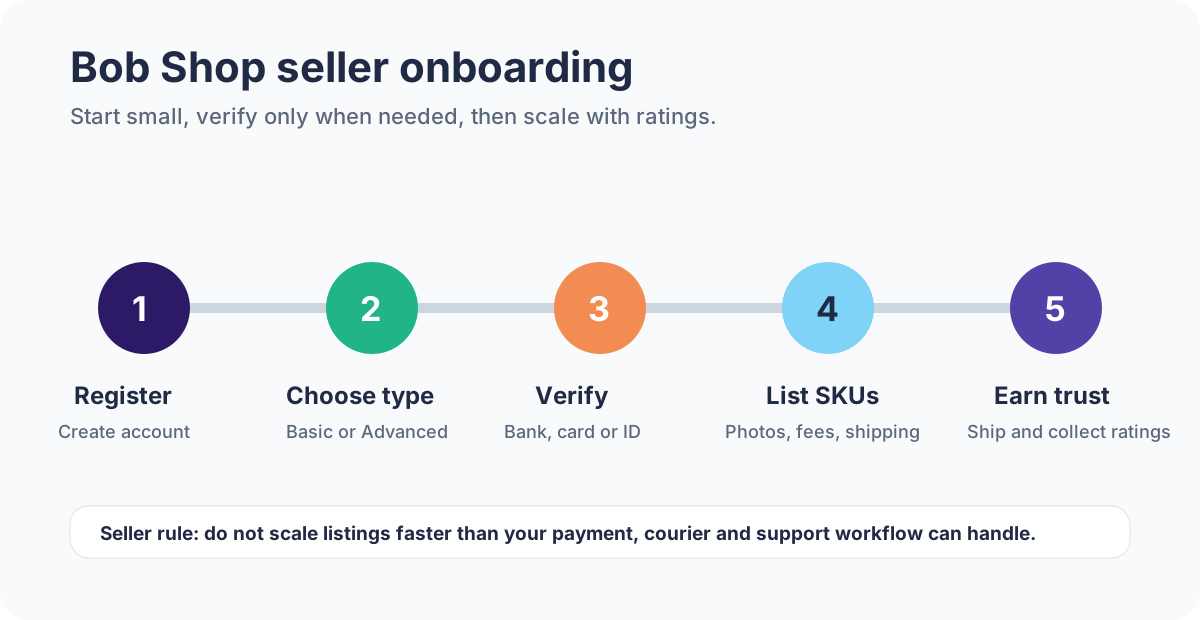
The first-listing sequence
The cleanest launch sequence is:
- create the account
- decide whether Basic Seller is enough or Advanced Seller is needed
- complete verification if required
- publish a small, well-described catalogue
- choose payment methods and shipping rules
- build the first ratings before expanding range or ad spend
Do not launch 200 weak listings just because the tool allows it. On Bob Shop, seller quality is visible.
Bob Shop fees: what to calculate before listing
Bob Shop fees are not hard to understand, but new sellers often read only the success fee and forget the rest of the operating cost.
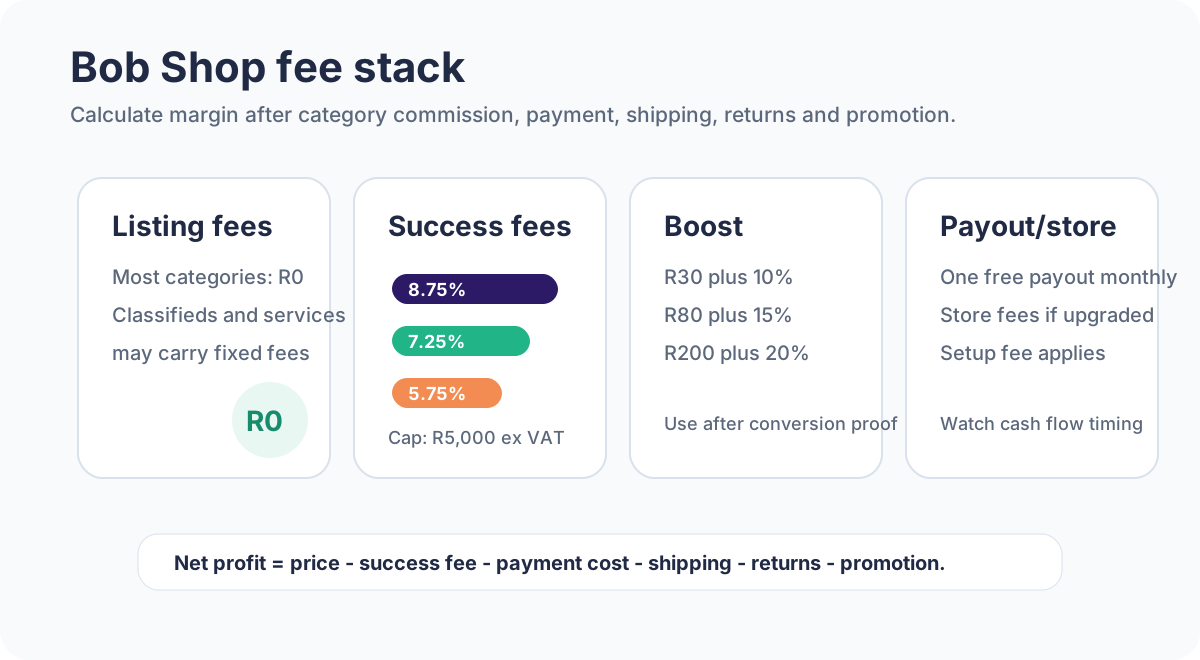
As of March 25, 2026, the official Bob Shop fee pages describe four fee areas that matter most:
Listing fees
Most categories can be listed for free, but Bob Shop charges listing fees for classifieds and certain service-related categories. The official selling fees page lists examples such as cars, property, jobs and travel. The exact fee depends on category, so sellers should check the rate card before opening a new vertical.
Success fees
Bob Shop charges a success fee when an item sells. The published fee rate card groups categories into tiers of 8.75%, 7.25% and 5.75%, excluding VAT, and caps the success fee at R5,000 excluding VAT per item. Electronics, computers and cell phones sit in the lower tier; fashion and many general categories sit higher.
The fee tier matters because two products with the same selling price can have different net margins. Before listing, calculate:
- selling price
- success fee tier
- VAT effect, if applicable to your business
- payment and payout cost
- courier cost or shipping subsidy
- return or warranty allowance
- marketplace promotions or Boost spend
Boost and enhancement fees
Bob Shop offers promotional visibility options. The Boost fee structure is tiered: sellers can pay a higher upfront amount and a higher extra success-fee percentage for more visibility. This can work for tested products, but it is expensive for unproven products with weak photos or unclear pricing.
Use Boost only after you know the listing converts.
Payout and store costs
If you withdraw bobPay EFT funds, Bob Shop's payout page says sellers get one free payout per calendar month. After that, a R5.00 excl. VAT transfer fee applies to payouts under R3,000, while larger payouts are fee-free. Store sellers should also budget for monthly store fees and setup cost.
The operating rule is straightforward: a profitable Bob Shop listing should still be profitable after success fees, payment costs, shipping, returns, and any visibility spend.
Bob Pay, Bob Go and the real fulfilment workflow
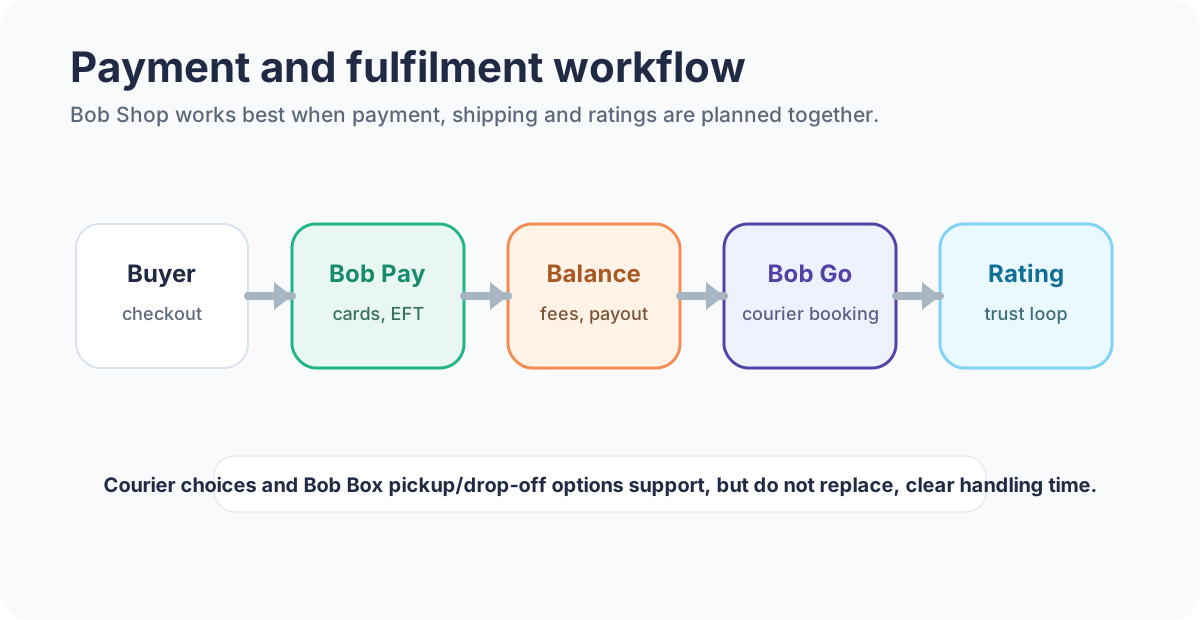
Bob Shop is easier to understand when you see it as part of the Bob ecosystem.
Bob Pay
Bob Pay is the payment layer used across the Bob ecosystem. On Bob Shop, buyers can pay through secure methods such as cards, EFT options, PayShap, Scan to Pay and other local payment methods listed in the official payment-methods help page. For sellers, the important point is not only that buyers can pay. It is when funds become available, when fees are deducted, and how often you want to request payouts.
Cash-flow tip: do not use buyer funds as if they are instantly free cash. Leave buffer for success fees, payout timing, refunds and shipping disputes.
Bob Go
Bob Go is the shipping and order-management layer. It helps merchants compare courier options, book shipments, print waybills and track parcels. Bob Shop's shipping overview also notes that sellers can book shipments and print waybills directly from Bob Shop with courier options such as The Courier Guy, Internet Express, RAM, SkyNet and Fastway.
For local sellers, this is where Bob Shop becomes operationally useful. You can keep listings flexible while still pushing fulfilment into a more structured courier workflow.
Bob Box
Bob Box is the locker network in the Bob ecosystem. It is useful when buyers or sellers need pickup and drop-off options instead of a pure door-to-door model. This does not remove your responsibility for clear handling times, but it gives sellers more last-mile choices.
Seller ratings, verification and buyer trust
Bob Shop buyers do not only buy a product. They also buy the seller's reputation.
The official trust and safety guidance explains that Bob Shop uses buyer and seller ratings, seller monitoring, random checks, Community Watch reporting, verified-user indicators and buyer protection mechanisms. The rating system includes positive, negative and neutral feedback, and the visible profile helps buyers judge whether a seller is reliable.
For sellers, this changes the launch strategy:
- your first 10 to 20 sales are reputation-building, not just revenue
- clear condition notes reduce disputes
- shipping delays hurt future conversion
- proactive messages can prevent negative ratings
- cancellations and vague stock status damage trust faster than many new sellers expect
Verified User and Store credibility
Bob Shop's verified-user programme involves a once-off verification fee and identity, credit and fraud checks. The benefit is not just an icon. Verification can increase buyer confidence and can be part of the path toward a Bob Shop Store.
The store path is worth considering only when you already have product depth and ratings. Bob Shop's store requirements include quality controls such as positive ratings, feedback percentage, listings count and commitment to customer service. That is useful because it turns trust into a more visible sales asset.
What Reddit and local community threads suggest
Reddit should not be used as a source for official rules, fees or policy. It is useful for buyer and seller sentiment.
Across the Bob Shop discussions shared for this article, users commonly frame the marketplace as familiar but seller-dependent. Some comments are positive about finding deals or dealing with established sellers. Others warn buyers to check ratings, seller age, verified status, whether the seller is local, and whether the product may be drop-shipped or slower than expected.
That is exactly how a seller should read the community feedback:
- reputation matters more than polished listing copy
- local stock and clear delivery promises can be a competitive advantage
- phone, electronics and grey-import categories need extra clarity
- new sellers should not hide behind vague supplier or courier excuses
Treat Reddit as a warning system for customer concerns, not as a replacement for official Bob Shop policy.
Common beginner mistakes
The most common Bob Shop mistakes are operational, not technical.
Choosing the wrong seller type
Basic Seller is useful for testing. It is not the best long-term setup for a serious catalogue. If payment methods, billing, relisting and bulk upload matter, move toward Advanced Seller.
Ignoring the fee tier
A product with a 5.75% success fee behaves differently from one at 8.75%. Always calculate net margin by category, not by average marketplace commission.
Overusing Boost too early
Boost can amplify a good offer. It cannot fix bad photos, vague specs, weak pricing or poor delivery promises.
Treating shipping as an afterthought
Handling time is part of the offer. If you advertise fast delivery but wait three days to ship, the rating system will eventually show it.
Copying Takealot listings without adapting
Bob Shop buyers often inspect seller reputation and listing detail more closely. A bare catalogue listing may work poorly unless the price, condition and delivery promise are obvious.
Selling cross-border without a local plan
China-based and other cross-border sellers should not rely on long, uncertain delivery times as the default. Local stock, a South African 3PL, or a very clear import listing is safer.
Is Bob Shop still worth it in 2026?
Yes, but not for every seller.
Bob Shop is still worth testing in 2026 if you are a South African seller with controlled inventory, clear fulfilment, and products that benefit from price discovery or seller reputation. It is also useful as a second marketplace beside Takealot, Amazon South Africa, Makro, or your own Shopify store.
It is not the best fit if you need a fully managed fulfilment operation, cannot answer buyer questions, or depend on vague supplier lead times. In those cases, Bob Shop will expose operational weakness faster than expected because the buyer sees the seller behind the listing.
For China and cross-border sellers, the answer is narrower:
- use Bob Shop to test demand for low-risk SKUs
- hold stock locally before scaling
- avoid categories where returns, warranties or compliance are difficult
- be explicit about dispatch location and delivery time
- build ratings slowly instead of chasing large volume immediately
The 2026 opportunity is not "easy South Africa ecommerce". The opportunity is that Bob Shop still gives sellers a flexible, established, trust-led marketplace where small wins can become a repeatable channel.
Final launch checklist
Before you list your first serious Bob Shop catalogue, confirm:
- your seller type matches your ambition
- your fees are calculated by category tier
- your payment and payout workflow is understood
- your shipping rules are realistic
- every listing states condition, warranty and included items clearly
- photos are clean enough for buyer confidence
- you can answer buyer questions within one working day
- you know which products should receive Boost and which should not
- you have a plan to earn the first 20 positive ratings
- you understand when a Bob Shop Store becomes worth the monthly cost
If you can tick those boxes, Bob Shop South Africa deserves a place in your 2026 marketplace strategy.