How to Sell on Amazon South Africa in 2026: Complete Guide for New Sellers
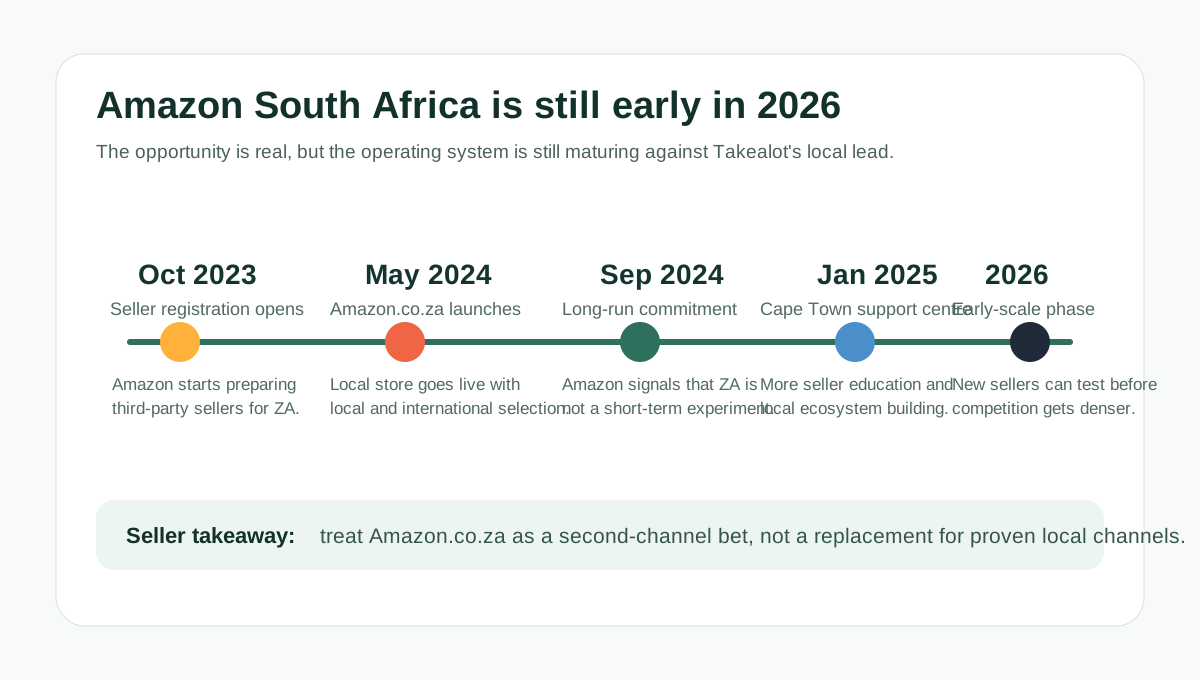
Amazon South Africa is no longer just a coming-soon headline. Amazon opened seller registration for South African businesses on October 17, 2023, and Amazon.co.za officially launched on May 7, 2024. By 2026, the local store is live, Seller Central is available, FBA and Easy Ship are part of the operating toolkit, and Amazon is actively building a seller ecosystem.
But this is still an early-stage marketplace.
For a new seller, that is the entire point. Amazon.co.za is not yet as familiar to local merchants as Takealot, and Takealot remains the benchmark for South African marketplace operations. At the same time, Amazon is moving quickly: it has public seller education, local fulfilment options, reduced fee incentives, and a Cape Town seller support presence reported by Reuters in January 2025.
This guide is written from a seller's point of view. It is not a platform brochure. It focuses on what you need to prepare, what can go wrong, and which seller profiles should move first.
Why Amazon South Africa matters in 2026
The first reason is timing. Amazon is still early enough in South Africa that sellers can learn the operating model before the marketplace becomes crowded, but it is no longer so early that the store is hypothetical.
Amazon's official launch announcement said customers could shop local and international brands across 20 product categories, use same-day and next-day delivery for eligible products, access 3,000 pickup points, and receive 30-day returns for Amazon.co.za orders. Those are meaningful buyer-side signals because marketplace supply only matters if the customer experience is becoming credible.
The second reason is market growth. World Wide Worx reported that South African online retail reached R71 billion in 2023, equal to more than 6% of total retail, and later research coverage from World Wide Worx pointed to online retail surpassing R130 billion in 2025. That matters because Amazon is entering a market that is still growing structurally, not just fighting for a fixed pool of online shoppers.
The third reason is competitive pressure. Reuters reported on May 7, 2024 that Amazon launched in a market dominated by Naspers-owned Takealot. That is still the realistic starting point in 2026. A seller should not assume Amazon replaces Takealot overnight. A better assumption is that Amazon becomes a serious second channel while Takealot remains the incumbent.
For a deeper platform comparison, read The 2026 E-commerce Battle: Amazon vs. Takealot.
Amazon is expanding, but Takealot is still the local reference point
Takealot is not standing still. Its official seller page continues to promote access to over 3 million happy online shoppers, seller payments four times per month, end-to-end tools, and marketplace logistics. Takealot Group also reported in its FY26 half-year update that takealot.com had 4.8 million active shoppers, over 18,000 marketplace sellers, and fulfilment centres spanning 280,000 square metres.
That gives Takealot a local operating advantage: seller familiarity, category depth, logistics habits, and buyer trust.
Amazon's advantage is different. It brings the Amazon brand, Seller Central tooling, global marketplace habits, FBA logic, and a long-term incentive to build product breadth. Reuters reported in September 2024 that Amazon said it was in South Africa for the long run, and in January 2025 that Amazon opened a Cape Town walk-in centre offering seller registration, training, product imaging, cataloguing help, and shipping support.
The seller conclusion is simple:
- Use Takealot as the benchmark for local marketplace maturity.
- Use Amazon.co.za as the channel where early learning may compound.
- Do not copy-paste your Takealot operation and assume it will work the same way on Amazon.

Who should sell on Amazon South Africa
Amazon.co.za is not equally attractive for every seller. The best fit depends on inventory location, operational discipline, category risk, and how patient you can be while the marketplace matures.
South African local sellers
Local sellers are the cleanest fit. If you already operate from South Africa, hold stock locally, understand courier performance, and can handle customer returns, Amazon.co.za gives you a second marketplace without forcing a full cross-border model.
You are a strong candidate if:
- you already sell on Takealot, Makro, your own Shopify store, or a wholesale channel
- your product data is clean enough to create Amazon listings
- you can handle proof of address, bank documents, VAT decisions, and identity checks
- you can ship consistently or send inventory into FBA
- you are willing to test a second channel before volume is obvious
For local sellers, the main risk is underestimating Amazon's account and catalogue standards. Amazon listing structure, product IDs, variation logic, brand ownership, image rules, and customer metrics can be stricter than the informal workflow many sellers use in early ecommerce operations.
Existing Amazon sellers
If you already sell on Amazon.com, Amazon UK, Amazon UAE, or another Amazon marketplace, South Africa may look familiar. You already understand Seller Central, account health, product detail pages, fulfilment economics, and the need to monitor policy changes.
Your advantage is process. Your disadvantage is local knowledge.
South Africa has different consumer expectations, import costs, pricing bands, courier realities, payment habits, VAT rules, and incumbent competition. Do not assume a product that works in the US will automatically work in South Africa at the same margin. You still need to rebuild your landed cost and delivery promise from scratch.
China-based and cross-border sellers
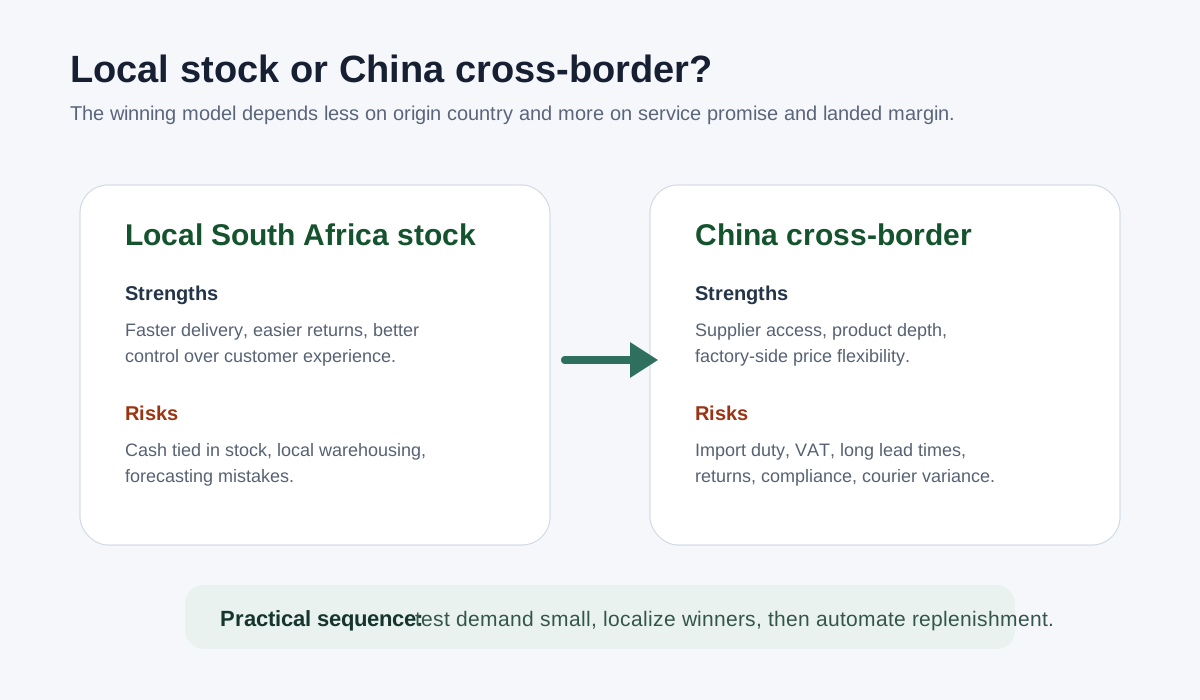
China-based sellers should treat Amazon South Africa as a test market, not a simple extension of the US or Europe playbook.
The opportunity is clear: China has supplier depth, low minimum order quantities in many categories, strong product development speed, and payment providers such as Payoneer and WorldFirst that support Amazon marketplace payouts. But the difficult part is local execution. South African customers will compare your offer against Takealot, local sellers, imported goods already held in South Africa, and Amazon-fulfilled items.
Cross-border sellers should first decide whether they are:
- shipping bulk stock into South Africa and fulfilling locally
- sending selected products into FBA after demand is proven
- using a local 3PL or partner to manage returns
- testing direct cross-border delivery only for low-risk products
If your product cannot survive long lead times, customs variation, returns friction, and customer service delays, do not start with direct cross-border fulfilment.
Documents required for registration
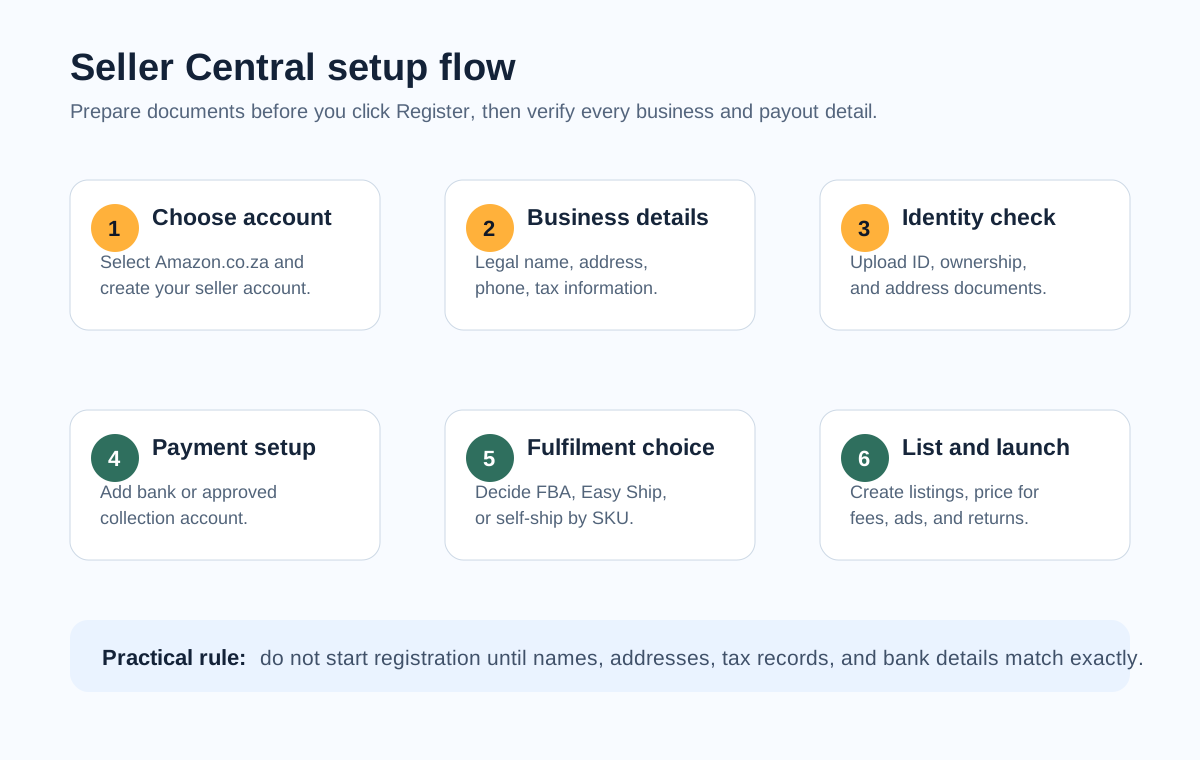
Amazon South Africa's public registration guide lists a five-step process: business information, seller information, billing information, store and product information, and identity verification.
Prepare these before you start:
- a dedicated seller email address
- phone number for OTP verification
- business location and business type
- exact legal business name
- company registration number if you have an incorporated business
- registered business address
- primary contact name exactly as it appears on ID
- country of citizenship and birth
- date of birth and residential address
- bank account or payment account details
- chargeable credit or debit card
- store name
- product ID plan, usually EAN, UPC, ISBN, or GTIN exemption route
- national ID, passport, or other accepted identity document
- proof of residential or business address dated within the required window
- tax information and VAT decision
Amazon's document rules are practical but strict. The ID should be clear, in colour, and show the full page or both sides where relevant. Bank or card statements used as proof should match the point of contact or business, show the bank logo and account details, contain the address, and be dated recently. Screenshots and blurry photos are a common reason for delay.
The most important operational rule is this: every name and address must match. Your company registration, bank statement, proof of address, primary contact name, and credit card billing information should tell the same story.
Step-by-step Seller Central setup
You can start from sellercentral.amazon.co.za or Amazon's public registration guide. Do the setup in a quiet session with all documents ready.
Step 1: Create the account
Use a dedicated seller email, not a shared team mailbox and not a personal email already mixed with buyer accounts. If you already use Amazon Brand Registry, Ads, or Vendor Central, think carefully before creating disconnected credentials. Access structure becomes painful later.
Step 2: Enter business information
Select your business location and type. If you are an individual, Amazon says you can choose the individual route. If you are a registered company, enter the exact legal name and registration number.
Do not abbreviate your company name unless the document itself uses that abbreviation. If your registration certificate says "Pro Trading Proprietary Limited", do not enter "Pro Trading Pty Ltd" unless that is an accepted legal format on your documents.
Step 3: Enter seller and beneficial owner details
Amazon asks for the primary contact and may ask whether that person is a beneficial owner, legal representative, or both. A beneficial owner normally means someone who directly or indirectly owns more than 25% of the shares or voting rights, or controls the business through other means.
If you are registering for a company where the operator is not the owner or legal representative, prepare authorization documents before Amazon asks for them.
Step 4: Add billing and payout details
Amazon's South Africa registration guide says the bank account must be in your name or your business name, and that a South African bank account is not always required if the bank account can be charged in ZAR. Amazon also says sellers may use Amazon Currency Converter in Seller Central to receive proceeds in a bank account outside South Africa.
For cross-border sellers, this is where Payoneer, WorldFirst, or another supported payment provider may enter the workflow. Payoneer publishes instructions for connecting local receiving account details to Amazon Seller Central. WorldFirst says it is a certified participant in Amazon's Payment Service Provider Program and supports Amazon Seller Central collections in multiple currencies.
Do not choose a payout setup only by FX rate. Check account-name matching, accepted marketplace coverage, withdrawal fees, statement format, and whether the statement can pass Amazon verification.
Step 5: Configure store and product information
Choose a store name that is readable, brand-safe, and not too narrow. You can usually change it later, but changing the customer-facing name after launch is messy.
For product information, decide how you will handle product IDs. Most Amazon products use recognized identifiers such as EAN, UPC, ISBN, or other GTINs. If you own a brand and do not have GTINs, research Brand Registry and GTIN exemption before listing.
Step 6: Verify identity
Amazon may ask you to upload ID and proof of address, take a photo of your face and ID, record a video, or schedule verification. Treat this like bank onboarding. Use high-quality scans, clear lighting, and documents that match exactly.
Step 7: Configure the account before listing
Once Seller Central opens, configure:
- public seller profile
- payment and business information
- tax settings
- shipping and returns settings
- notification preferences
- login security
- user permissions
- fulfilment settings
Do this before you upload products. Many new sellers rush to listings first, then discover that returns, shipping settings, VAT assumptions, or notification routing are wrong.
Amazon South Africa seller fees explained
Fees are time-sensitive, so check the live Amazon South Africa fees page before pricing. This article's source check was completed on May 8, 2026.
As of that check, Amazon South Africa's public pages showed:
- Individual plan: R10 per item sold
- Professional plan: promotional R1 per month until 31 March 2027, regularly R400 per month
- referral fees: normally category-based, with most shown between 8% and 20%
- promotional flat 5% referral fees until 31 March 2027
- all listed fees excluding applicable VAT unless stated otherwise
- optional fulfilment, storage, advertising, and programme fees depending on the services used
The practical fee stack for a product can include:
- selling plan fee
- referral fee
- FBA fulfilment fee or Easy Ship fee
- storage fee if using FBA
- inbound shipping to Amazon or local warehouse
- return cost
- VAT treatment
- advertising cost
- payment provider and FX cost
- local packaging and prep cost
For beginners, the mistake is pricing from supplier cost only. Amazon margin must be calculated from landed cost to bank account.
Use this simple model:
Selling price - VAT impact - referral fee - fulfilment cost - inbound shipping - product cost - returns allowance - ads - payment/FX fees = operating margin
If that number is not positive before you scale, more orders will not fix the business.
VAT and tax issues
This is not tax advice, but you should not treat VAT as an afterthought.
SARS announced in the 2026 Budget that from 1 April 2026 the compulsory VAT registration threshold increased from R1 million to R2.3 million in taxable supplies per year, and the voluntary registration threshold increased from R50,000 to R120,000. SARS published follow-up FAQs in April 2026 explaining the new threshold.
For a South African seller, the questions are:
- Are you already VAT registered?
- If not, will you exceed the compulsory threshold in a rolling 12-month period?
- Would voluntary registration help because you sell to VAT-registered business customers or have meaningful input VAT?
- How will you display VAT-inclusive retail pricing?
- Can your accounting system reconcile Amazon fees, VAT, refunds, and payout timing?
For a foreign seller or China-based seller, add import questions:
- Who is importer of record?
- Who pays customs duties and import VAT?
- Are product classifications correct?
- Are safety, labeling, battery, chemical, medical, cosmetic, food, or wireless requirements relevant?
- Can returns be processed inside South Africa?
If you are not sure, get local tax and customs advice before sending stock. The expensive mistake is discovering after launch that your landed cost was wrong or that the product cannot clear reliably.
FBA vs Easy Ship vs Self Ship in South Africa
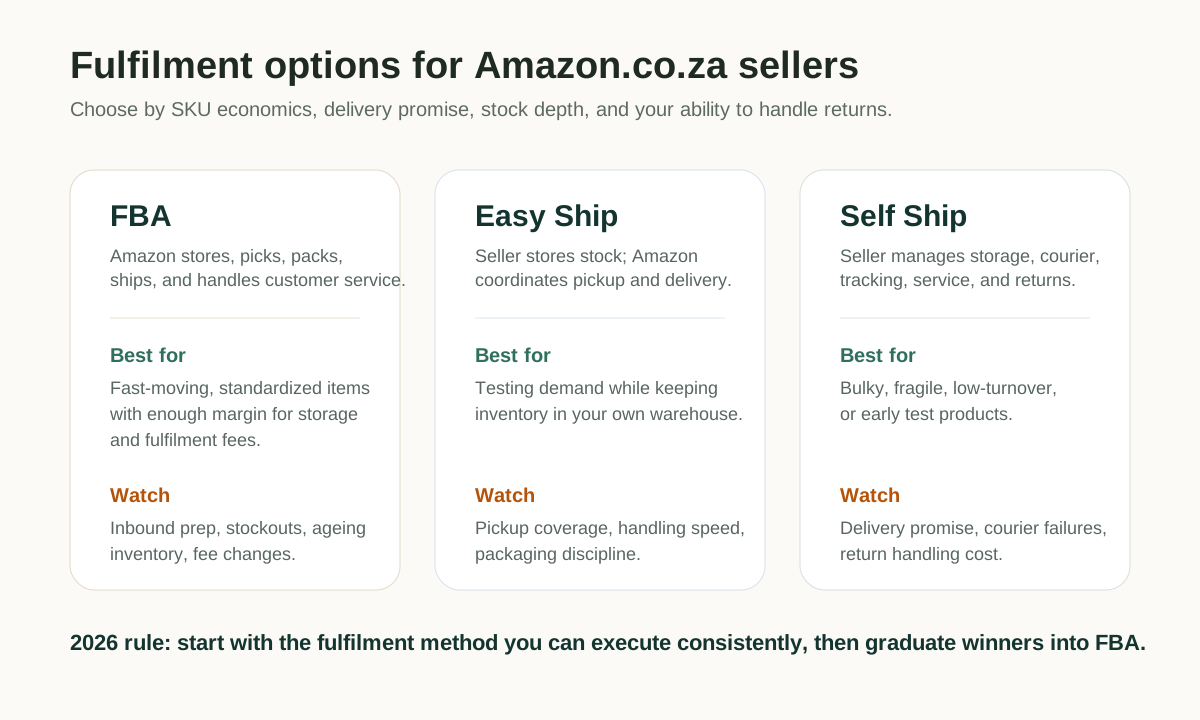
Amazon South Africa currently gives sellers three practical fulfilment models: FBA, Easy Ship, and Self Ship.
FBA
With Fulfilment by Amazon, you send inventory to Amazon fulfilment centres in South Africa. Amazon stores, picks, packs, ships, handles customer service, and processes returns for eligible orders.
FBA is best for:
- fast-moving products
- standardized SKUs
- items where delivery speed affects conversion
- products with enough margin to absorb fulfilment economics
- sellers who do not want to build their own customer service and returns operation
FBA risk comes from inventory planning. If you send too much stock, cash is trapped. If you send too little, you lose rank and availability. If the product is fragile, oversized, restricted, seasonal, or has high return rates, FBA may not save you.
Easy Ship
Amazon Easy Ship lets sellers store their own inventory, then hand over packaged orders to Amazon-managed partner carriers. Amazon says Easy Ship can manage customer service and returns for these orders. The public page also notes that Easy Ship uses partner carriers such as The Courier Guy and DPD Laser, with assignment handled automatically.
Easy Ship is best for:
- sellers with their own warehouse
- small and medium items
- early demand testing
- sellers who want delivery support without immediately sending stock into FBA
The risk is operational consistency. You still need to pick, pack, label, and hand over orders correctly.
Self Ship
Self Ship means you manage storage, courier selection, tracking, service, and returns yourself.
It is best for:
- bulky products
- fragile goods
- slow-moving inventory
- special handling products
- sellers with an already reliable courier and returns network
The risk is that Amazon customers judge the full order experience, not just the product. Slow dispatch, poor tracking, and weak return handling can damage account health.
Local fulfilment vs shipping from China
For China-based sellers, the core decision is whether to hold inventory in South Africa.
Direct cross-border shipping can look attractive because it avoids local stock commitment. In practice, it often creates problems:
- slower delivery than local competitors
- customs and duty uncertainty
- high customer anxiety after dispatch
- difficult returns
- weaker customer service
- worse marketplace metrics if delays occur
Local fulfilment is more expensive upfront but usually gives a stronger customer promise. The better approach is often staged:
- Research demand and competition.
- Test with a small product range.
- Import limited stock for local fulfilment or FBA.
- Track conversion, return reasons, and ad cost.
- Expand only the products with stable landed margin.
For a full logistics risk breakdown, read Shipping to South Africa: Common Logistics Pitfalls.
Best product categories for beginners
The best beginner products are not necessarily the trendiest products. In an early marketplace, you want products where the seller can control quality, data, price, and fulfilment.
Good starting zones:
- home organization and storage
- simple kitchen accessories
- office and school supplies
- pet accessories that are not regulated or ingestible
- replacement parts with clear compatibility
- sports and outdoor accessories
- beauty tools that avoid chemical or claims risk
- bundles around local use cases
Be careful with:
- lithium batteries and electronics
- wireless devices
- cosmetics and health products
- food, supplements, and ingestibles
- children's products with safety requirements
- branded products without authorization
- fragile glass or ceramic goods
- bulky furniture and appliances
- fashion if size and return rates are not controlled
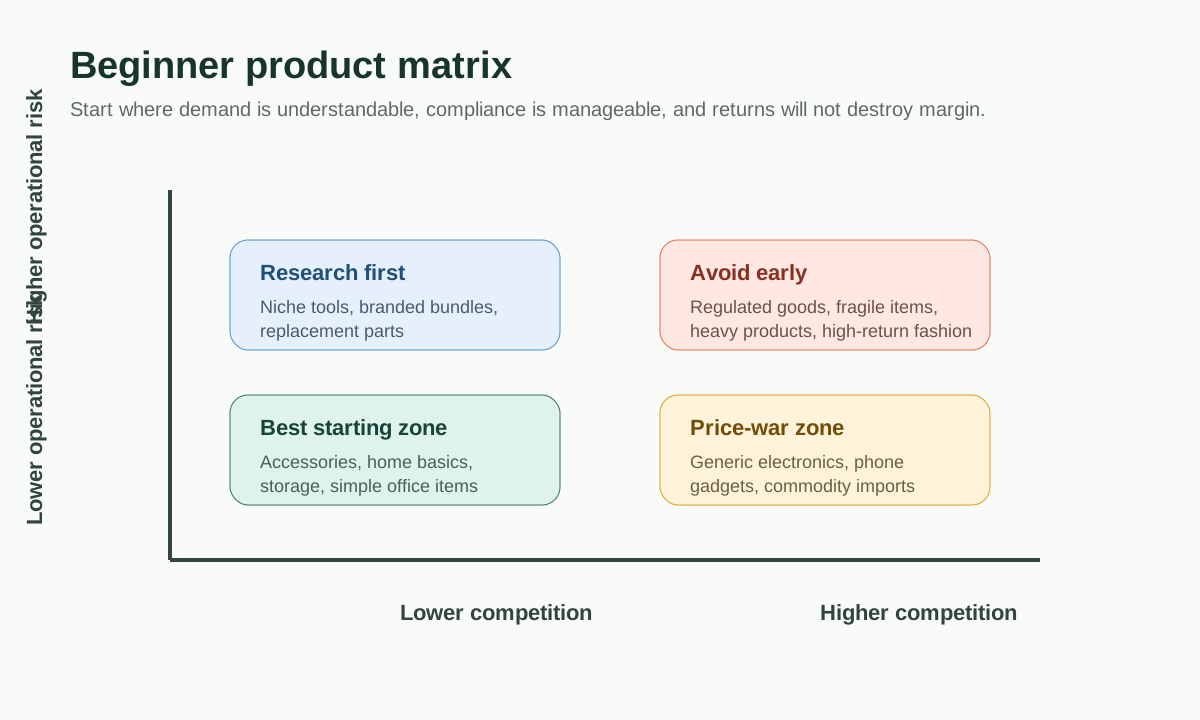
Amazon.co.za's current stage rewards sellers who can create trustworthy listings, keep stock available, and solve a buyer problem better than generic imports. Do not chase every low-cost product from a supplier catalogue. Start with 10 to 30 SKUs you can explain, photograph, replenish, and support.
For research workflow, combine Amazon search, Takealot comparison, keyword checks, supplier cost, and local delivery economics. You can also use internal marketplace research habits from competitor research for product opportunities and keyword research for high-converting keywords.
Common mistakes new sellers make
Mistake 1: Registering before documents match
If your bank statement, proof of address, company registration, and ID do not match, wait. Fix the paperwork first.
Mistake 2: Treating Amazon like Takealot with a different logo
Amazon has different listing logic, account health expectations, fulfilment options, and brand tools. Use your Takealot experience, but do not assume identical workflows.
Mistake 3: Ignoring VAT and import cost
VAT, customs duties, FX, and payment fees can erase the margin that looked healthy in a spreadsheet.
Mistake 4: Sending too many SKUs into FBA
FBA is powerful, but new sellers should not use it as a dumping ground. Send winners, not guesses.
Mistake 5: Competing only on price
Takealot, Amazon, Shein, Temu, local retailers, and imported goods all create price pressure. You need better packaging, clearer listings, bundles, reviews, faster delivery, or a more specific customer problem.
Mistake 6: Using Reddit as market proof
Reddit communities such as r/southafrica, r/askSouthAfrica, and r/FulfillmentByAmazon are useful for reading buyer frustration, delivery sentiment, and seller anecdotes. They are not a substitute for official fees, Seller Central rules, tax guidance, or your own sales data.
Is Amazon South Africa worth it in 2026?
Yes, for the right seller. No, if you expect instant Takealot-level volume with no learning curve.
Amazon.co.za is worth serious attention in 2026 if:
- you already have products and want a second marketplace
- you can handle clean registration and compliance
- you are willing to test before volume is obvious
- you have local stock or a realistic route to local fulfilment
- your products can compete on trust, delivery, and product detail quality
- you want to learn Amazon systems before the market becomes crowded
It is less attractive if:
- you need immediate predictable sales
- your margin only works with slow direct cross-border shipping
- your product is compliance-heavy
- you cannot manage returns
- your business cannot tolerate fee, policy, or operational changes
The best 2026 strategy is not to bet the whole business on Amazon South Africa. It is to build a disciplined Amazon test channel while keeping the rest of your marketplace operation healthy.
FAQ
When did Amazon South Africa launch?
Amazon.co.za officially launched on May 7, 2024. Seller registration for South African-based sellers opened on October 17, 2023.
Do I need a South African company to sell on Amazon.co.za?
Not always. Amazon's registration guide includes an individual seller route and says business location should match where the business is registered or where the individual does business from. Requirements can vary by seller type, so check the live Seller Central registration flow.
Do I need a South African bank account?
Amazon's South Africa registration guide says a South African bank account is not always required, but the bank account needs to be chargeable in ZAR. It also references Amazon Currency Converter for receiving proceeds outside South Africa. Payment providers such as Payoneer and WorldFirst may help, but account-name matching and statement quality matter.
Is FBA available in South Africa?
Yes. Amazon South Africa has a public FBA page and fulfilment overview showing FBA, Easy Ship, and Self Ship as fulfilment options.
Should new sellers start with FBA or Easy Ship?
Start with the method you can execute reliably. Easy Ship can be a good testing bridge if you already hold stock. FBA is better for proven, fast-moving products where Amazon-managed fulfilment improves conversion enough to justify the economics.
What should China-based sellers do first?
Do not start by sending a large container of untested stock. Build a shortlist, calculate landed cost, check compliance, test small, then localize winners through a South African warehouse, 3PL, Easy Ship, or FBA.
Is Amazon South Africa better than Takealot?
Not as a general statement. Takealot remains the stronger local incumbent in 2026. Amazon is the earlier-stage channel with upside. Serious sellers should understand both.