Takealot Registration Requirements: The Essential Checklist Before You Apply
Understanding Takealot registration requirements starts with identifying who will own the seller account. A sole proprietor and a registered company do not need identical paperwork, and information requested during account registration may differ from the initial application.
Takealot separates its seller journey into application, registration, onboarding and selling. Completing an application therefore does not mean products are immediately ready to go live.
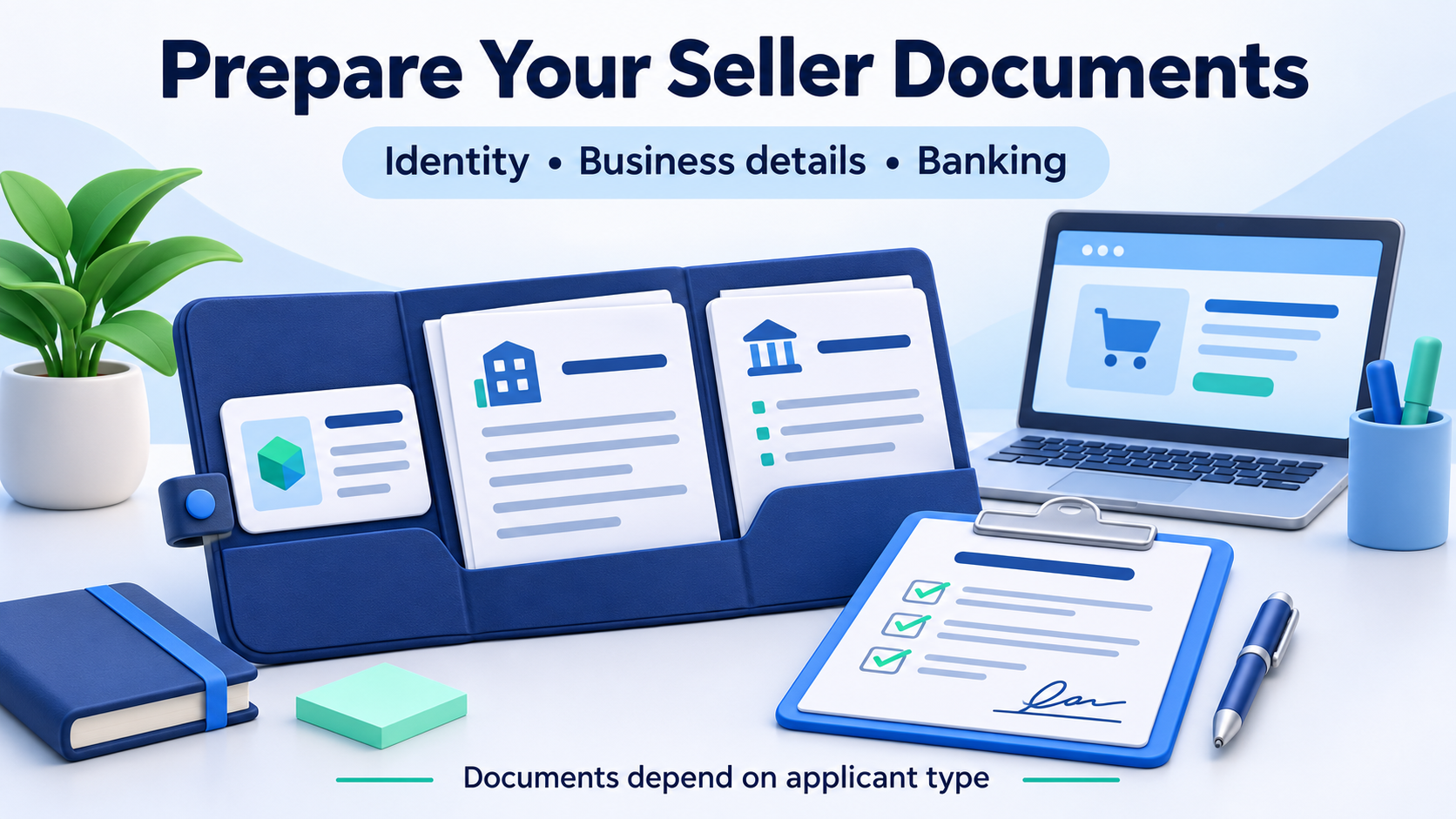
For South African sellers, the practical approach is to prepare the relevant identity, business and banking records first, then follow the fields shown for the selected applicant type. This guide explains what to gather, what to check and what to prepare next.
1. Takealot Registration Requirements: Who Can Apply?
Sole Proprietor vs Registered Company: Choosing the Right Seller Type
Takealot’s account guide accommodates both sole proprietors and registered companies. Sole proprietors register in their personal capacity; company applicants supply company registration information.
Choose the person or entity that will actually operate the seller account. For example, someone trading personally under “Cape Kitchen Finds” should distinguish that trading name from their own legal identity. A company applicant should work from its registration records rather than entering an abbreviated brand name wherever legal details are requested.
Before starting, create a reference sheet containing the applicant’s legal details and the proposed storefront name. This gives anyone helping with the application one consistent set of information.
VAT Number and BEE Status: Understanding Conditional Requirements
VAT registration is not a blanket Takealot eligibility requirement. The account guide permits a blank VAT number for non-registered applicants. It also allows sellers without BEE status to select “Non-compliant.”
However, platform eligibility does not determine tax liability. SARS currently administers a compulsory VAT registration threshold of R2.3 million in taxable supplies over a consecutive 12-month period, effective from 1 April 2026. Written contractual commitments can also trigger registration obligations.
Track taxable supplies across the business, including other sales channels. Do not treat Takealot turnover as the only figure relevant to a VAT review.
Applicant Details: Keeping Legal Names and Contact Information Consistent
Compare names and numbers against the underlying records before submitting. Check spelling, registration digits and the email address used for correspondence.
Use an inbox that will remain accessible to the business. Save application confirmations and subsequent requests in a dedicated folder so that registration correspondence can be found without searching personal messages.
2. Takealot Seller Registration Documents: What to Prepare
Identity Documents and Company Registration Records
The following checklist summarises the main distinctions in Takealot’s account guide. It concerns account registration; follow the live application for the timing of each request.
Information or document | Sole proprietor | Registered company |
|---|---|---|
Legal name | Owner’s full name | Registered legal name |
Identity records | Applicant’s ID | All directors’ IDs |
Company registration number and proof | Not applicable as a company record | Required |
South African bank account | Required | Required |
Signed debit order form | Required | Required |
VAT number | If registered | If registered |
BEE certificate | If applicable | If applicable |
Keep company and personal documents in separate folders. Suggested filenames such as Company_Registration.pdf and Director_Name_ID.pdf make it easier to select the correct attachment.
Avoid sending extra sensitive records simply because an unrelated checklist mentions them. Prepare relevant documents, then provide those requested through the appropriate registration process.
South African Bank Account Details and Debit Order Authorisation
Prepare the account holder name, bank, account number and branch code. Check these against the bank’s own records rather than relying on a handwritten note.
The signed debit order form should reflect the same banking details entered during registration.
A useful final check is to have a second person compare the account number digit by digit. If working alone, read it backwards in small groups to reduce the chance of overlooking a repeated typing error.
Supporting Document Uploads: File Size, Readability and Completeness
Takealot’s account guide specifies a 10 MB maximum for supporting files; check the current upload field for any more specific instructions.
Before uploading:
- Open every file and confirm that it is the intended document.
- Check that names, numbers, signatures and page edges are visible.
- Include all relevant pages.
- Follow the accepted format displayed beside the upload field.
- Retain the original if compression reduces readability.
Do not compress a scan until important text becomes blurred. A smaller file is only useful if the reviewer can still read it.
3. Takealot Seller Application: What to Check Before and After Submission
Product Range and Stock Information: Preparing Accurate Application Answers
Prepare a concise description of the products intended for sale. “Homeware” provides little detail; “stainless-steel lunch boxes and reusable food-storage containers” describes a clearer range.
Build a small preparation sheet with product names, brands where relevant, available quantities, supplier details and replenishment estimates. Use it to answer the questions actually displayed.
Distinguish stock already available from stock that still needs to be ordered. If a supplier normally takes three weeks to replenish an item, use that realistic estimate when planning availability.
Application Review and Seller Portal Onboarding: What Happens Next?
Start through the official Takealot seller application. Takealot describes registration as completing required information and paperwork, followed by onboarding to learn its processes and select a stock model.
Keep a record of the submission date, confirmation and any reference provided. When further information is requested, identify the exact missing item before responding.
Do not commit to a launch date solely because the application has been submitted. Plan stock purchases and marketing around confirmed progress, allowing room for additional questions or corrections.
Product Listing Requirements and Marketplace Fees: Preparing to Start Selling
Prepare a separate launch checklist for product identifiers, images, descriptions, packaged dimensions, weights and any applicable category documentation. Confirm the current listing requirements before buying labels or packaging in bulk.
Registration preparation should also include a cost sheet. Takealot’s seller information identifies subscription, success, fulfilment and storage fees as marketplace cost categories. Check the current schedule for the intended products and stock arrangement.
For an illustrative calculation, suppose a product sells for R350. If stock costs R150, assumed marketplace charges total R70, and packaging and inbound transport cost R20, the remaining contribution is R110 before overheads, returns and tax. These are example figures, not Takealot fee quotations.
After launch, compare estimates with actual charges. For sellers using Revenuealot, this cost sheet provides a useful baseline for reviewing product performance and investigating margin differences.

FAQs
1. Can you sell on Takealot without a registered company?
Yes. Takealot’s account guide includes sole proprietors registering in their personal capacity. Select the appropriate applicant type and follow its requirements.
2. Do you need a VAT number to register as a Takealot seller?
Not necessarily. Non-VAT-registered applicants may leave the VAT number blank, but should assess their tax obligations separately.
3. What documents are required for Takealot seller registration?
Prepare the documents relevant to the selected applicant type using the table above. Follow the live registration process for any additional requests.
4. Is a BEE certificate compulsory to sell on Takealot?
No. The account guide permits applicants without BEE status to select “Non-compliant.” Supply certification where applicable.
5. How long does the Takealot seller application process take?
Avoid relying on a guaranteed turnaround. Use the timeframe stated in current application communications, and follow up through the indicated channel if it passes.