Why Takealot Product Management Becomes Harder as Your Catalogue Grows
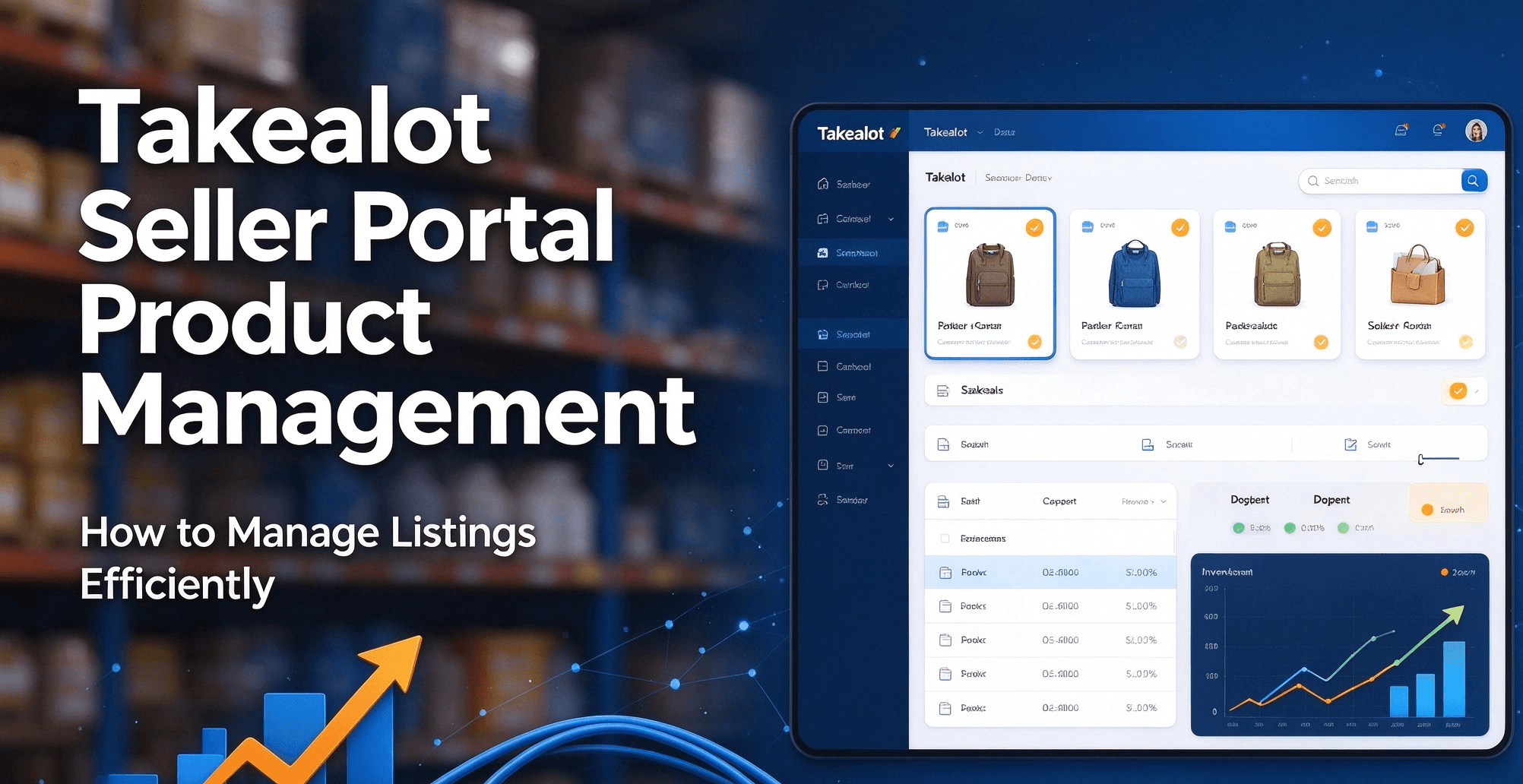
Managing ten products on Takealot is very different from managing hundreds of SKUs. When I look at product management from an operational perspective, the biggest challenge is rarely creating a listing once.It is keeping every product accurate, consistent, competitive, and easy to maintain over time.
A title might no longer reflect the product specification.An image may be outdated. Pricing in a spreadsheet may not match the current offer, while stock information needs attention just as a promotion is about to start. When these issues happen across a large catalogue, sellers spend more time correcting product data than improving their business.
For South African sellers, inefficient listing management can also make expansion into other marketplaces harder.Product descriptions, images, identifiers, and stock records may be scattered across spreadsheets, the Takealot Seller Portal, and separate store management systems. Updating each channel independently increases the chance of mistakes.
So, how can we manage Takealot product listings efficiently without sacrificing accuracy?
I recommend building a repeatable process around three priorities: maintaining a reliable product catalogue, improving listing quality using relevant data, and establishing a consistent workflow for product updates.Tools such as RevenueAlot can support this process by centralising product information and helping sellers manage listings across connected marketplace accounts.
The goal is not simply to manage more listings.It is to make every product easier to maintain, measure, and improve.
Takealot Seller Portal Product Management: Build a Reliable Product Catalogue
Before optimising product pages, I recommend checking the quality of the underlying catalogue. A well-organised product catalogue makes it easier to identify the correct items, update information, and avoid unnecessary duplication.
Match Products Correctly Before Creating New Listings
When adding a product to Takealot, start by checking whether the product already exists in the marketplace catalogue. If a matching product is available, follow the appropriate existing-product and offer workflow rather than creating a duplicate product record. If it is a genuinely new product, follow the Seller Portal’s current product submission process.
Takealot’s Marketplace API documentation distinguishes offer information from product identifiers and exposes fields such as SKU,TSIN ID,selling price, title, and offer status. These identifiers are useful when reconciling records and investigating product management issues.
I always recommend maintaining a consistent SKU convention across internal records and connected systems. For example, a seller offering several variations of a product should be able to distinguish those variations without relying on memory or an ambiguous product name.
A clear SKU structure helps with searching, reporting, inventory reconciliation, and team handovers. It also makes it easier to trace the same item when your business starts using additional sales channels.
Standardise Product Titles, Descriptions, and Attributes
Product information should be accurate before it is persuasive. A keyword-rich title cannot compensate for an incorrect specification, and an attractive description is not useful if it creates the wrong expectations.
When reviewing Takealot product listings, I focus on the following fields:
Product field | What I check | Why it matters |
|---|---|---|
Product title | Brand,product type,model,and relevant specifications | Helps shoppers understand the item and its intended use. |
SKU and product identifiers | Consistent values across internal records | Reduces confusion during updates and reconciliation. |
Product description | Clear benefits, specifications, compatibility, and included items | Helps customers determine whether the product meets their needs. |
Product attributes | Correct size, colour, material, capacity, and other category-specific details | Improves information accuracy and supports informed purchasing. |
Images | Correct product, variant, packaging, and visual presentation | Helps shoppers understand what they are buying. |
Price and stock | Alignment with current commercial decisions and availability | Reduces avoidable discrepancies between offers and operations. |
These checks should be adapted to the relevant product category and Takealot’s current requirements. I would not assume that every category uses the same required attributes or image rules.
I also recommend maintaining a clear distinction between product content and offer information. Product content describes the item itself, while offer information relates to the seller’s commercial offer, such as selling price and availability. This distinction makes audits easier because different problems require different corrective actions.
Create a Product Data Standard Before Scaling
A product data standard is a simple set of rules for how your business records information. For example, decide how brand names are formatted, how measurements are recorded, how product variants are named, and where approved images are stored.
Without these rules, small inconsistencies accumulate. Two team members may describe the same product differently, or a product's specifications may change in one spreadsheet but not another.
I suggest using one controlled internal product record as the reference for each sellable item. Assign responsibility for approving important changes, and record when key product fields were last reviewed. The reference record does not replace the marketplace's own catalogue or approval process; it helps your team maintain reliable information when preparing and updating listings.
Getting this foundation right means less time spent cleaning up mistakes later and more time available for sales analysis and listing optimisation.
Takealot Seller Portal Listing Optimisation: Improve Discoverability and Buyer Confidence
Once the product catalogue is accurate, the next step is improving how shoppers find and understand your products.
Listing optimisation is not just about inserting more keywords. I approach it as a combination of search relevance, product clarity, competitive positioning, and ongoing performance review.
Use Keyword Research to Improve Takealot Product Listings
Before rewriting a product title or description, I recommend understanding the terms customers are likely to use when searching for the product.
Start with the product category, brand, model, core function, and important specifications. A shopper looking for a storage container, for example, may also search using its capacity, material, intended location, or dimensions. Relevant search terms depend on the product and the customer's specific need.
I use keyword research to identify useful opportunities, but I avoid adding every possible phrase to a listing. Irrelevant keywords can make product content confusing and weaken its usefulness to shoppers.
Revenuealot offers Takealot keyword research tools that provide search-volume data, competition analysis, and keyword-related advertising suggestions. These insights can help sellers prioritise relevant terms for product page optimisation and advertising research.
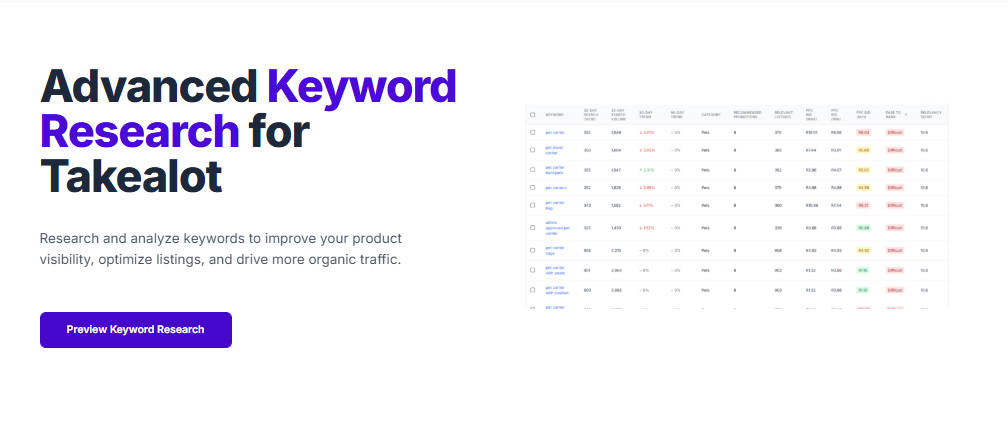
A practical workflow is to select a small group of relevant keywords, review their relationship to the product, and incorporate them naturally into suitable content. The product title should remain clear and accurate, while the description should answer the questions that matter to buyers.
Keyword research should inform decisions rather than replace product knowledge. Search-volume estimates and competition indicators are useful signals, not guarantees of ranking or sales.
Improve Product Images and Descriptions for Buyer Confidence
Product images and descriptions should work together. Images help shoppers identify the product and understand its appearance, while written information explains specifications, benefits, compatibility, and practical limitations.
I recommend reviewing the main image first. Does it clearly show the correct product? Is the image consistent with the selected variant? Does it match the item's actual appearance? Supporting images should provide additional useful information instead of repeating the same view unnecessarily.
Descriptions should answer predictable buyer questions. Depending on the category, these might include dimensions, material, capacity, compatibility, care instructions, or what is included in the package.
Consider a kitchen appliance. A general description such as “high-quality and easy to use” provides little decision-making value. Information about its capacity, dimensions, functions, and compatibility is more useful because it helps shoppers assess whether it fits their needs.
I also check that specifications agree across the title, images, description, and attributes. Contradictions can confuse customers and may contribute to avoidable returns.
Most importantly, follow Takealot's current category-specific content requirements. A standardised internal template is useful, but it should never encourage sellers to publish inaccurate or irrelevant information.
Review Listing Performance Before Making Changes
An underperforming product does not automatically need a new title. The issue could be pricing, availability, competition, product content, or a mismatch between the product and the search terms being targeted.
I recommend examining several indicators together:
- Page views: Is the product receiving attention?
- Conversion rate: Are visitors placing orders?
- Returns: Are customers experiencing a problem after purchase?
- Price and availability: Is the offer competitive and available to buy?
- Listing status and quality: Is there a technical or information-related issue requiring attention?
Takealot's Marketplace API documentation includes fields for page views, recent conversion percentages, quantities returned, listing quality, and offer status. These are useful examples of the data sellers can use to investigate listing performance.
I interpret metrics in context rather than treating any single number as a final answer. Low traffic may justify reviewing keyword relevance, while high traffic but weak conversion may warrant closer examination of price, content, competition, and buyer expectations. A rise in returns calls for checking customer feedback and product accuracy before making assumptions.
Where possible, compare equivalent time periods and account for stock availability, promotions, and seasonal demand. Change one major factor at a time when practical, then review the result. This makes it easier to understand which adjustments appear to help.
Takealot Seller Portal Workflow: Manage Listings Efficiently with Revenuealot
Strong listing management is an ongoing process, not a one-time clean-up exercise. The more products and stores a business operates, the more important it becomes to establish a reliable workflow.
I recommend using scheduled reviews, clearly defined responsibilities, and a central source of product information where possible.
Establish a Repeatable Listing Maintenance Routine
Rather than reviewing every product in the same way every day, group work by urgency and business impact.
For example, a product with a listing error or stock discrepancy requires a different response from a product whose title could be improved. A practical priority system could look like this:
Priority | What to review | Recommended response |
|---|---|---|
High | Incorrect product information, unavailable offers, or urgent stock and price discrepancies | Investigate and correct the issue promptly. |
Medium | Weak conversion, rising returns, or outdated images and attributes | Investigate the underlying cause and prioritise corrective work. |
Ongoing | Keyword relevance, competitor positioning, and opportunities to expand the catalogue | Review performance and test improvements systematically. |
Review frequency should reflect sales volume, product risk, seasonality, and how frequently prices or stock change. Fast-moving products may need closer monitoring than stable, low-volume items.
I also recommend documenting important changes. A short record of the previous value, new value, date, and reason makes it easier to review outcomes and investigate unexpected performance changes.
Use RevenueAlot to Centralise Product Management
As a business expands beyond a small number of listings, maintaining product information across separate systems becomes increasingly difficult. This is where RevenueAlot's product management and listing synchronisation capabilities can support a more organised workflow.
RevenueAlot is a South African ecommerce management SaaS platform designed to help businesses manage their authorised marketplace accounts and related operational data.
Its Product Management and Listing Sync functionality provides a central view of listings associated with supported channels. According to its current documentation, sellers can search and filter listings by product, SKU, platform, and store, then inspect related listing records, statuses, and identifiers.
Revenuealot's Listing Management documentation also describes importing existing listings from connected Takealot stores, creating product records manually, maintaining product information, and tracking statuses such as Draft, Synced, and Error.
In practical terms, this can help teams:
First, reduce repetitive catalogue administration. Importing existing Takealot listings provides a starting point for reviewing product information instead of manually rebuilding every record.
Second, make listing status easier to review. A central view helps teams identify which records are drafts, which have been synchronised, and which require investigation.
Third, prepare products for additional marketplaces. RevenueAlot's documented multi-marketplace workflow allows eligible Takealot listings to be used as source listings for destination publication workflows involving supported marketplaces, including Amazon, Temu, and Makro. Destination-specific information, compliance, logistics, and other requirements still need to be handled for the relevant channel.
Fourth, connect product operations with research and analysis. RevenueAlot also provides Takealot research and analytics tools that can support keyword research and product performance reviews.
Availability varies by feature and subscription plan. Its multi-channel Product Management and Listing Sync page specifies Business and Enterprise plan availability, so I recommend checking the current product information and plans before selecting a workflow.
Revenuealot is not a substitute for understanding Takealot's marketplace requirements. Sellers should continue to verify product-specific requirements, offer information, and final listing status in the appropriate marketplace tools.
A Practical Workflow for Managing Takealot Listings
I would organise the process into five steps:
Audit the current catalogue. Identify duplicate or inconsistent internal records, missing product information, outdated images, and listings that need attention.
Prioritise corrections. Address accuracy, availability, and urgent offer problems before spending time on lower-impact content improvements.
Optimise the product page. Review relevant keywords, title clarity, descriptions, attributes, and images against category requirements.
Use a central management workflow where appropriate. Organise connected product records and review synchronisation statuses using RevenueAlot's supported features and plan.
Measure and repeat. Revisit page views, conversion, returns, pricing, and availability to decide what to improve next.
This process makes product management easier to delegate and repeat. It also provides a clear way to connect day-to-day listing maintenance with longer-term growth decisions.
FAQ: Takealot Seller Portal Product Management
1. How do I manage product listings in the Takealot Seller Portal?
Start by reviewing existing products and offers, checking product information, and identifying any errors or inconsistencies. Maintain accurate titles, attributes, images, prices, and stock-related information as relevant to your offer. Use the Seller Portal's current workflows for editing existing offers or submitting new catalogue products, and verify the resulting status.
2. How can I improve my Takealot product listing quality?
Focus first on accuracy and clarity. Use relevant product keywords naturally, write informative titles and descriptions, check product attributes, and ensure images represent the correct item. Then review performance indicators such as page views, conversion, returns, pricing, and availability to identify where further improvements may be needed.
3. How often should I review Takealot product listings?
There is no single ideal frequency for every seller. Check high-priority stock, price, and listing-status issues regularly, and schedule more detailed content and performance reviews according to sales volume, product category, and the rate of change in your catalogue. High-volume or frequently repriced products generally warrant closer attention.
4. Can RevenueAlot help manage Takealot listings across multiple marketplaces?
Yes. RevenueAlot offers centralised product management and documented listing synchronisation workflows for eligible connected accounts and supported platforms. Its Product Management feature lets users view and search related listings across channels, while its publishing workflows can use eligible Takealot listings as sources for supported destination marketplaces. Specific functionality depends on the subscription plan and channel workflow.
5. Does RevenueAlot replace the Takealot Seller Portal?
No. RevenueAlot is a complementary ecommerce management and analytics tool. It provides supported product management, research, analytics, and cross-marketplace workflows, while sellers should continue to use Takealot's own tools to verify marketplace-specific requirements, offer information, and listing outcomes.
Final Thoughts
Efficient Takealot Seller Portal product management starts with accurate product data, but it does not end there. Sellers also need a practical approach to listing optimisation, performance monitoring, and routine maintenance.
I recommend standardising product information first, using relevant data to guide listing improvements, and introducing centralised workflows as your catalogue grows. RevenueAlot can support these efforts by helping organise connected product records and prepare listings for supported multi-marketplace operations.
The most useful system is one your team can repeat consistently. When product data is easier to maintain and problems are easier to identify, you can spend less time correcting avoidable errors and more time making informed decisions about your Takealot business.