What can I sell on makro marketplace? My Practical Guide to Choosing Your First Products
I would start selling on Makro Marketplace with products I can describe accurately, replenish reliably and deliver without expensive surprises. For a South African seller, that could mean researching compact home organisers, non-powered accessories or manageable outdoor products before committing to a large inventory.
However, a product appearing on Makro’s website does not prove that every marketplace seller can list it. Retail stock, third-party listings and category-specific requirements can differ.
In this guide, I separate product ideas from permission to sell. My examples are research candidates, not a confirmed list of approved categories. Before purchasing stock, I would check Makro’s current seller documentation and obtain clarification on any uncertain requirements.
1. What Can I Sell on Makro Marketplace? Categories to Explore
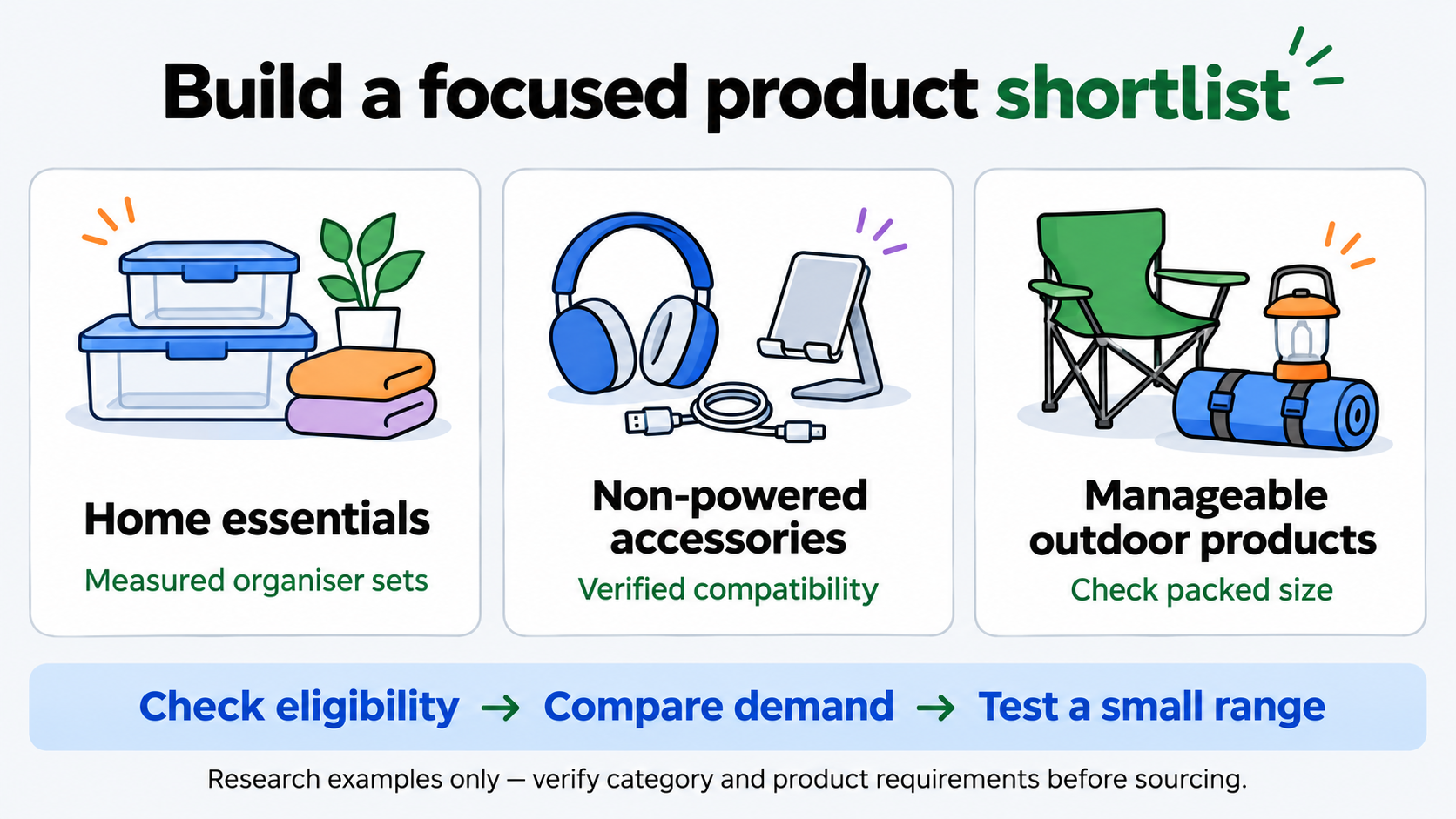
Home essentials, electronics accessories and outdoor products
I would build my first shortlist around products with straightforward specifications and limited opportunities for customer misunderstanding.
Product idea to research | What I would verify before sourcing | Main commercial risk |
|---|---|---|
Drawer organisers | External dimensions, material and pack quantity | Buyers choosing the wrong size |
Laundry baskets | Packed dimensions, rigidity and stacking ability | Bulky delivery costs |
Laptop stands | Supported device sizes, load capacity and adjustability | Compatibility complaints |
Protective device cases | Exact supported model and generation | Returns caused by model confusion |
Garden hand tools | Materials, dimensions and included components | Quality issues or missing pieces |
Picnic accessories | Capacity, materials and cleaning instructions | Seasonal demand and leakage complaints |
I would compare specific products rather than broad categories. “Homeware” is too vague for a sourcing decision; a six-piece drawer organiser set with measured dimensions is something I can price, photograph and evaluate.
For a first range, I would favour a few clearly differentiated products over many nearly identical variations. Every additional size, colour or model increases the chance of picking errors and inaccurate stock records.
Restricted products and category approval
Before ordering, I would check three separate questions: is the product permitted, can my business sell it, and does it require supporting documentation?
I would give additional scrutiny to food, supplements, cosmetics, medical products, electrical goods, batteries and products making health or safety claims. These examples are not a statement of Makro’s current restricted list; they are areas where product-specific rules can materially change the decision.
My supplier file would include:
- An invoice identifying the supplier and the goods purchased.
- Exact brand names, model numbers and product identifiers.
- Authenticity or brand-authorisation documents where required.
- Applicable safety, labelling or regulatory documentation.
- Written warranty terms and a process for defective stock.
For relevant electrical or wireless products, I would investigate whether NRCS or ICASA requirements apply. I would not assume a supplier’s overseas certificate automatically satisfies South African requirements.
If approval remains unclear, I would send seller support the exact product description and model details before committing money.
2. How I Choose Products to Sell on Makro Marketplace
Local demand, competition and seasonal trends
Once eligibility is clear, I would examine competing listings for each shortlisted product.
I would record the selling price, pack quantity, specifications, delivery promise and recurring review complaints across several comparable listings. Comparing a single item with a multipack can make an attractive price look uncompetitive—or hide poor value.
Customer reviews are especially useful for identifying information my listing needs. If buyers repeatedly mention that an organiser is smaller than expected, I would show its measurements clearly and photograph it beside recognisable household items.
I would treat reviews as evidence of customer concerns, not as a reliable measurement of current sales volume.
For South African seasonal demand, I would connect stock purchases to a specific selling period. Picnic products may suit summer shopping, while school-related organisers may have a different buying window. I would confirm supplier lead times before ordering: stock arriving after the intended period can tie up cash for months.
My initial order would reflect what I can afford to test and hold, rather than a supplier’s discount threshold.
Product margins, marketplace fees and fulfilment costs
I would calculate contribution per sale before deciding that a product is profitable. The following is an illustrative calculation, not Makro’s actual fee schedule:
Item | Illustrative amount |
|---|---|
Selling price | R299 |
Landed product cost | −R120 |
Marketplace charges assumed for this example | −R45 |
Delivery or fulfilment cost borne by me | −R40 |
Packaging | −R8 |
Allowance for returns and defects | −R12 |
Contribution before overheads and tax | R74 |
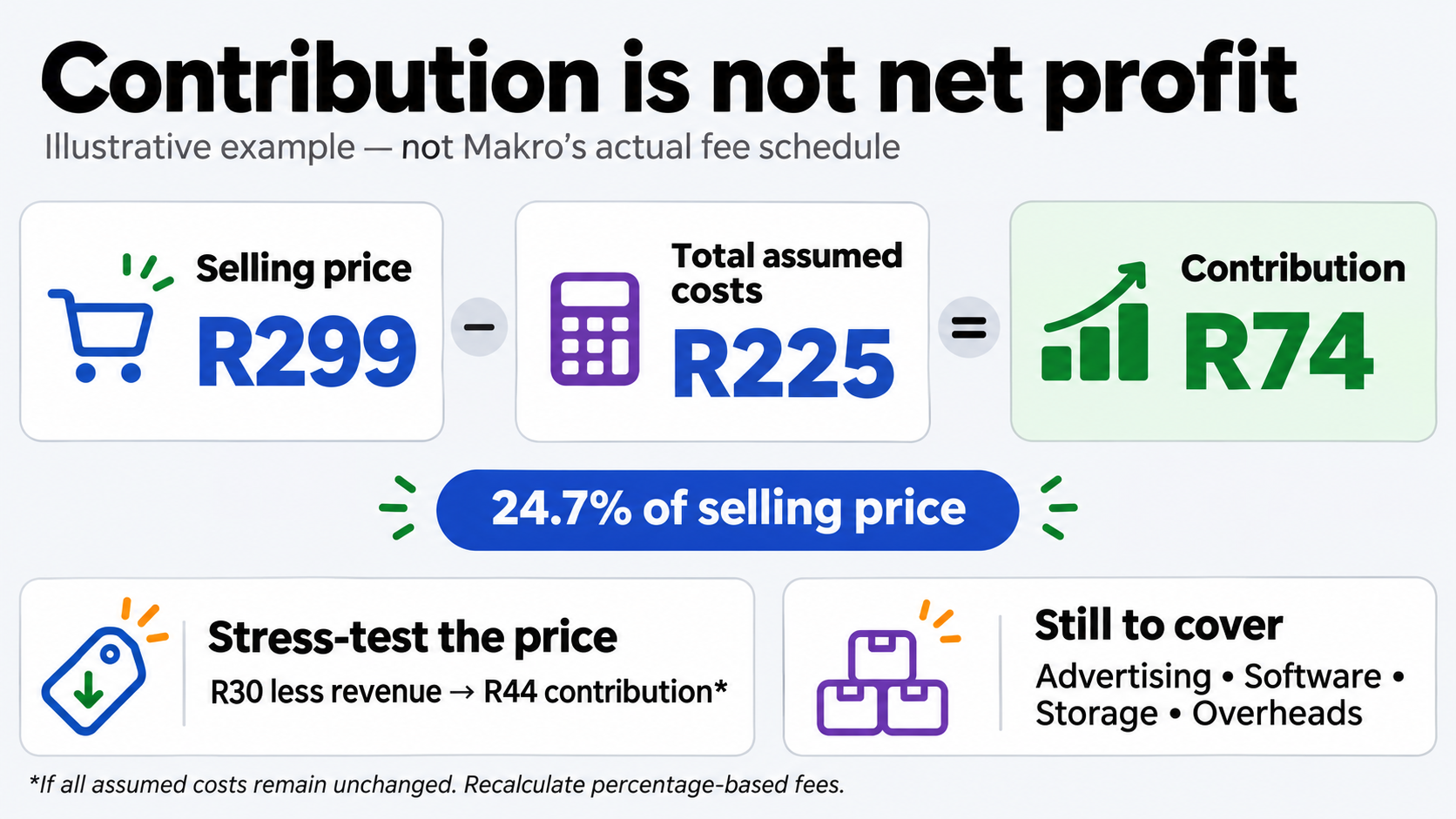
Here, contribution is approximately 24.7% of the selling price. It is not net profit: advertising, software, storage and other business expenses still need to be covered.
I would replace every assumption with my actual costs and Makro’s current applicable charges. If VAT-registered, I would calculate on a consistent VAT basis, accounting for recoverable input VAT where applicable.
I would also test a lower selling price. If revenue falls by R30 and all costs remain unchanged, the example’s contribution drops from R74 to R44. Percentage-based fees may also change, so the final calculation needs recalculating.
Packed dimensions matter as much as product weight. A lightweight laundry basket can occupy substantial delivery space, so I would obtain a quote using the packaged item before purchasing a batch.
3. How I Prepare My Makro Marketplace Product Listings
Product descriptions, images and accurate specifications
I would write each listing to answer the questions a shopper would otherwise need to ask.
For a drawer organiser set, I would use a title structure such as:
[Brand] 6-Piece Plastic Drawer Organiser Set – Clear – [Verified Dimensions]
I would replace every placeholder with verified information and follow Makro’s current title requirements.
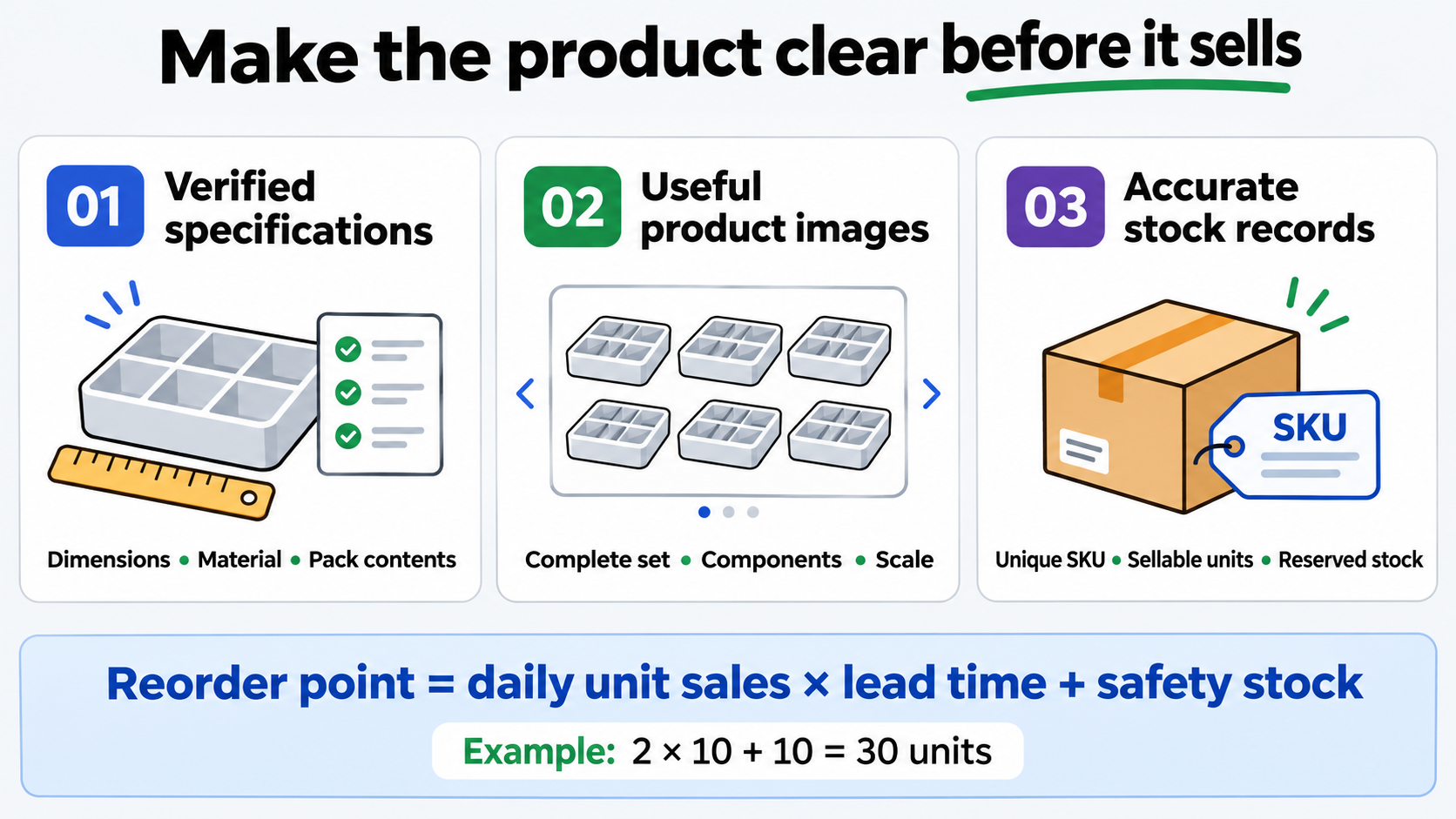
The description would state what arrives in the package, the dimensions of each piece, the material, the colour and any relevant limitations. If the pieces differ in size, I would list each size separately.
My images would show the complete set, individual components and useful dimension references, subject to the platform’s image rules. I would avoid displaying accessories that could be mistaken for included items.
For device accessories, I would name supported models precisely. “Fits most phones” is less useful than a verified compatibility list. I would also avoid claims such as “waterproof,” “food-safe” or “heavy-duty” unless I have evidence supporting them.
Inventory management and sales performance
I would assign a unique SKU to every sellable variation and keep it consistent across purchasing, storage and reporting.
My stock record would distinguish between units physically present and units available to sell. Damaged items and units reserved for existing orders should not remain available in marketplace inventory.
To plan replenishment, I would use:
Reorder point = average daily unit sales × replenishment lead time + safety stock
For example, selling two units daily with a ten-day replenishment lead time and ten units of safety stock gives a reorder point of 30 units. I would adjust this as actual sales and supplier reliability become clearer.
In my weekly review, I would track contribution per SKU, returns by reason and stock coverage. Revenue alone would not determine which products I reorder.
If a product sells but generates repeated compatibility returns, I would correct the listing or investigate the product before buying more.
Frequently Asked Questions
1. What can I sell on Makro Marketplace as a new seller?
I would research clearly specified home, accessory and outdoor products, then verify category eligibility and documentation requirements before sourcing.
2. Which products are prohibited or restricted?
I would consult Makro’s current prohibited and restricted product rules. An existing listing is not sufficient evidence that my proposed product is permitted.
3. Can I sell my own brand on Makro Marketplace?
I would confirm the applicable brand and listing requirements first, then prepare product identifiers, ownership information and compliance documents where required.
4. How do I check whether a product needs approval?
I would review seller documentation and ask support about the exact category, brand and model, retaining the written response.
5. How do I calculate profit before listing a product?
I subtract landed cost, applicable platform charges, delivery, packaging and expected return costs from revenue, then account for overheads and tax.