Ultimate Guide to Tracking Takealot Product Data Trends with Revenuealot
In the competitive world of South African e-commerce, data-driven decisions are the cornerstone of success. For Takealot sellers, understanding product trends, pricing history, and customer preferences isn't just helpful—it's essential for survival and growth in an increasingly competitive marketplace.
Unlike Amazon sellers who have access to multiple research tools, Takealot merchants have historically lacked comprehensive data analytics solutions—until now. Revenuealot has emerged as the first and only dedicated data analytics platform specifically designed for Takealot sellers, offering unprecedented insights that can transform your business strategy.
Why Product Research Matters for Takealot Sellers
Before diving into the how-to, let's understand why proper product research is crucial:
- Investment Protection: Identifying profitable products before investing saves you from costly inventory mistakes
- Competitive Edge: Understanding market gaps helps you discover opportunities others miss
- Profit Maximization: Data-informed pricing strategies optimize your profit margins
- Inventory Optimization: Historical trend data helps you stock the right products at the right time
- Growth Planning: Recognizing emerging trends early positions you ahead of competitors
According to a recent study, sellers who conduct thorough product research are 3.5x more likely to achieve sustainable profitability compared to those who rely on intuition alone.
Video Tutorial: Revenuealot Analytics Platform
The Takealot Product Research Challenge
Unlike global marketplaces like Amazon, Takealot presents unique challenges for sellers:
- Limited Data Transparency: Traditional Takealot doesn't freely provide historical data or competitor insights
- South African Market Specificity: Global product research tools often lack relevant local market data
- Currency and Economic Factors: Unique considerations for the South African economy affect pricing strategies
- Takealot-Specific Algorithms: Understanding how Takealot's unique algorithms affect product visibility
- Regional Customer Preferences: South African shoppers have distinct preferences that differ from global trends
Comprehensive Takealot Product Research Strategies
Strategy 1: Revenuealot Data Analytics Platform
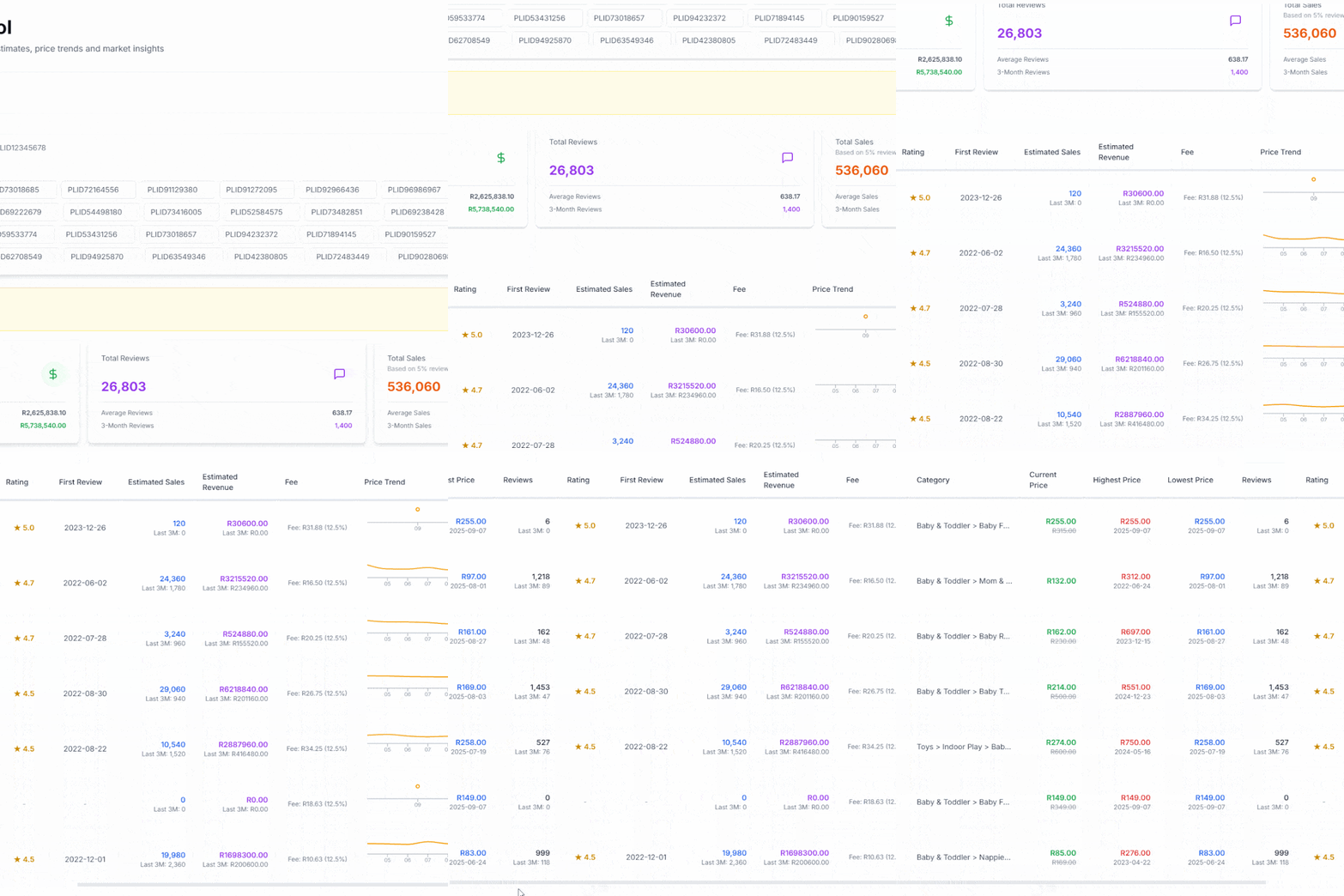
Revenuealot stands as the premier solution for Takealot sellers, offering:
- Historical Price Tracking: Access up to 6 years of pricing data for any Takealot product
- Chrome Extension: Get instant insights while browsing Takealot listings
- Competitor Analysis: Identify all sellers for any product and their pricing strategies
- Review Trend Analysis: Track review patterns and AI-powered sentiment analysis
- Sales Estimation: Calculate potential sales volume based on proprietary algorithms
- SKU Distribution Analysis: Understand which variations (color, size, etc.) perform best
Strategy 2: Google Trends for Market Research
While not specific to Takealot, Google Trends offers valuable insights into South African search behavior:
- Search Term Analysis: Track how search interest for products changes over time
- Regional Interest: Identify which provinces show highest interest in specific products
- Related Queries: Discover associated search terms that reveal consumer interests
- Seasonality Patterns: Recognize when interest in products peaks throughout the year
- Category Comparisons: Compare interest between related product categories
Pro Tip: Filter Google Trends data specifically for South Africa to get the most relevant insights for Takealot selling.
Strategy 3: Competitive Analysis on Takealot
Even without specialized tools, direct observation on Takealot can yield insights:
- Bestseller Rankings: Regularly monitor Takealot's bestseller lists in your categories
- Review Monitoring: Analyze competitor product reviews for identified pain points
- Price Tracking: Manually track competitor pricing changes over time
- Product Listing Analysis: Study successful competitor listings for optimization tactics
- Deal Days Performance: Observe which products get featured during major sales events
While useful, this manual approach is time-consuming and lacks the historical perspective that Revenuealot provides.
Strategy 4: Social Media Trend Monitoring
Social platforms provide a window into South African consumer interests:
- Facebook Groups: Join local buying/selling groups to identify popular products
- Instagram Trending Products: Monitor trending products among South African influencers
- Twitter Conversations: Track discussions around products and brands
- TikTok Trends: Identify viral products gaining traction in South Africa
- Pinterest Popularity: Monitor product pins growing in popularity locally
For a deeper dive into social media research, see our related article: Using Social Media to Identify Takealot Product Opportunities.
Getting Started with Revenuealot for Takealot Research
Step 1: Set Up Your Research Environment
- Create a Revenuealot Account:
- Visit Revenuealot.com
- Select a subscription plan tailored to your selling volume
- Complete your seller profile with relevant information
- Install the Chrome Extension:
- Add the Revenuealot extension to Chrome or Edge
- Login with your Revenuealot credentials
- Pin the extension for easy access while browsing Takealot
- Configure Your Dashboard:
- Set up your product categories of interest
- Add competitor tracking for key sellers
- Configure price and stock alerts for important products
Step 2: Identifying Profitable Product Opportunities
Revenuealot's platform enables systematic product opportunity identification:
Criteria for Profitable Takealot Products:
Factor | Ideal Range | Why It Matters |
|---|---|---|
Monthly Sales | ≥300 units | Ensures sufficient demand |
Price Range | R350-2,000 | Balances profit margin with affordability |
Review Count | 50-500 | Shows established demand without excessive competition |
Competitor Count | 3-15 | Indicates market opportunity without saturation |
Seasonal Stability | <30% monthly fluctuation | Provides consistent year-round sales |
Profit Margin | ≥30% after fees | Ensures sustainable profitability |
Follow these steps within Revenuealot to find opportunities matching these criteria:
- Category Analysis:
- Use the Category Explorer to identify promising niches
- Sort by sales volume to find high-demand categories
- Filter for competition levels to find underserved markets
- Keyword Research:
- Enter seed keywords related to your interests
- Analyze search volume and competition metrics
- Identify high-opportunity keyword niches
- Competitor Analysis:
- Identify top-performing sellers in your category
- Analyze their product selection and pricing strategies
- Find gaps in their offerings that you can fill
- Product Validation:
- Once you've identified potential products, use the Product Analyzer
- Check historical price trends for stability
- Analyze review growth to confirm sustained interest
- Estimate potential sales and ROI
For more detailed validation techniques, check our article: 5 Steps to Validate Your Takealot Product Ideas.
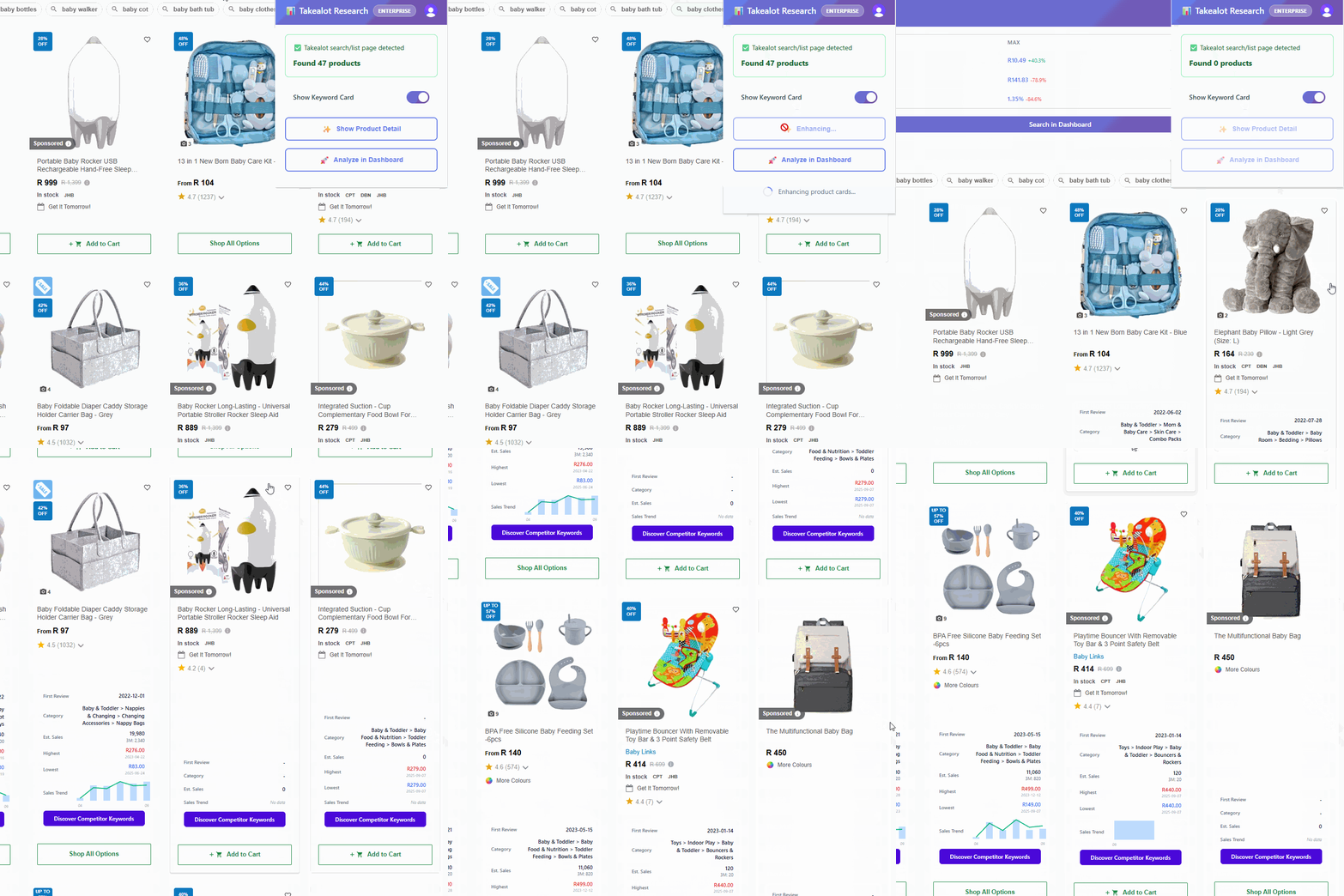
Advanced Product Trend Analysis with Revenuealot
Historical Price Trend Analysis
Understanding price history is crucial for both product selection and pricing strategy:
- Long-Term Price Stability:
- Analyze 6-year price history to identify products with stable demand
- Avoid products showing consistent price erosion over time
- Identify products that maintain value despite competition
- Seasonal Price Patterns:
- Recognize recurring seasonal price fluctuations
- Identify optimal buying and selling windows
- Plan inventory purchases around historical price lows
- Promotion Impact Analysis:
- Measure how Takealot promotions affect pricing
- Determine true discount levels during sales events
- Understand post-promotion price recovery patterns
- Competitive Price Positioning:
- Track how competitor price changes affect market dynamics
- Identify price sensitivity thresholds for different products
- Determine optimal price positioning relative to competitors
SKU Distribution Analysis
One of Revenuealot's unique features is the ability to analyze which specific variations of products sell best:
- Color Preference Analysis:
- Identify which colors consistently sell best in your category
- Spot emerging color trends before competitors
- Stock inventory proportional to color popularity
- Size Distribution Insights:
- Understand the size distribution curve for your product category
- Identify frequently understocked sizes that represent opportunities
- Optimize inventory to match actual size demand
- Feature Preference Tracking:
- Determine which product features command premium prices
- Identify feature combinations with highest demand
- Develop products that align with proven feature preferences
- Bundle Opportunity Identification:
- Discover complementary products frequently purchased together
- Identify bundle opportunities others have missed
- Create high-margin bundles based on actual purchasing patterns
Review Sentiment Analysis
Revenuealot's AI-powered review analysis provides deeper insights than simple star ratings:
- Sentiment Trend Tracking:
- Monitor how customer sentiment evolves over time
- Identify emerging quality issues before they affect your business
- Recognize improving products that may represent opportunities
- Feature Sentiment Analysis:
- Understand which product features receive positive vs. negative mentions
- Identify common pain points across multiple products
- Develop improved versions that address known weaknesses
- Competitive Sentiment Comparison:
- Compare sentiment analysis across competing products
- Identify relative strengths and weaknesses
- Develop marketing that emphasizes comparative advantages
- Geographic Sentiment Differences:
- Recognize regional variations in product reception
- Tailor marketing to address regional preferences
- Identify geographically-specific opportunities
For more on leveraging customer reviews, see our guide: How to Use Takealot Reviews to Improve Your Products.
Practical Application: Creating a Takealot Product Research Framework
Implementing an effective research process requires a systematic approach. Here's a proven framework used by successful Takealot sellers:
Phase 1: Market Exploration (Days 1-3)
- Broad Category Analysis:
- Use Revenuealot to analyze top-level categories
- Identify subcategories with favorable demand/competition ratios
- Generate initial list of 10-15 promising categories
- Trend Analysis:
- Check Google Trends for search interest patterns
- Identify categories with stable or growing interest
- Eliminate categories with declining interest
- Initial Competitive Assessment:
- Identify major players in shortlisted categories
- Assess barrier to entry based on brand dominance
- Eliminate categories with insurmountable competition
Phase 2: Niche Selection (Days 4-7)
- Subcategory Deep Dive:
- Analyze sales distribution across subcategories
- Identify niches with sufficient demand but manageable competition
- Shortlist 5-7 promising niches
- Profitability Analysis:
- Calculate average selling prices in target niches
- Research estimated procurement costs
- Calculate potential margins after Takealot fees
- Eliminate niches with insufficient margin potential
- Seasonal Stability Check:
- Use Revenuealot's historical data to assess year-round demand
- Identify niches with lower seasonal fluctuations
- Prioritize niches with consistent demand patterns
Phase 3: Product Selection (Days 8-14)
- Product Criteria Development:
- Establish minimum requirements for sales volume
- Set acceptable competition thresholds
- Define minimum profit margin requirements
- Systematic Product Analysis:
- Use Revenuealot to analyze top 100 products in target niches
- Score products against established criteria
- Create shortlist of 10-20 potential products
- Deeper Product Validation:
- Analyze price history for stability
- Check review growth patterns
- Assess competitor quality and positioning
- Validate sourcing options and costs
- Final Selection:
- Select 3-5 products for initial market entry
- Develop differentiation strategy for each
- Create sourcing and pricing plan
For a printable version of this framework, download our Takealot Product Research Worksheet.
Case Studies: Successful Product Research in Action
Case Study 1: Electronics Accessory Success
A new Takealot seller used Revenuealot to identify an opportunity in the mobile accessories category:
- Research Process:
- Used Revenuealot to analyze the entire electronics category
- Discovered that phone chargers had high demand but varying satisfaction
- Identified specific pain points from review analysis: durability and charging speed
- Found a specific niche: premium fast-charging cables with lifetime warranties
- Implementation:
- Sourced higher-quality cables with better materials
- Emphasized durability and charging speed in listings
- Priced 15% higher than average competitors but offered lifetime warranty
- Results:
- Achieved 325% ROI within first 60 days
- Maintained 78% Buybox win rate despite premium pricing
- Expanded to full line of premium charging accessories
Case Study 2: Kitchen Product Opportunity
A seller identified a kitchen product opportunity through seasonal trend analysis:
- Research Process:
- Used Revenuealot's historical data to analyze seasonal products
- Discovered silicone baking mats had 300% sales increase during holiday season
- Found that inventory consistently sold out before peak demand
- Identified gap: premium gift-ready sets were unavailable
- Implementation:
- Developed gift-ready packaging for silicone baking mat sets
- Stocked inventory strategically before competitors
- Used PPC advertising to capture early seasonal demand
- Results:
- Sold out initial inventory within 3 weeks
- Achieved 42% profit margin during peak season
- Expanded to year-round kitchen product line
For more case studies, read our article: From Research to Revenue: 5 Takealot Success Stories.
Comparing Takealot Research Methods: Pros and Cons
Research Method | Pros | Cons | Best For |
|---|---|---|---|
Revenuealot | • Comprehensive historical data | • Subscription cost | Serious sellers looking for data-driven decisions |
Google Trends | • Free to use | • Not Takealot-specific | Supplementary research and trend validation |
Manual Research | • No additional tools needed | • Extremely time-consuming | Beginners or very small-scale sellers |
Social Media | • Identifies emerging trends | • Not quantitative | Trend spotting and consumer preference research |
Common Product Research Mistakes to Avoid
Even with the right tools, sellers often make these critical research mistakes:
- Insufficient Historical Analysis: Looking at only current data without understanding longer-term trends
- Solution: Use Revenuealot to analyze at least 12 months of historical data
- Ignoring Seasonal Factors: Failing to account for seasonal demand fluctuations
- Solution: Analyze year-over-year data to identify true seasonal patterns
- Over-reliance on Bestsellers: Focusing only on current top sellers without considering competition
- Solution: Look for products with strong but not excessive demand
- Neglecting Logistics Considerations: Choosing products without considering shipping costs and complexities
- Solution: Factor in weight, size, and fragility during product selection
- Misinterpreting Review Data: Taking review counts at face value without sentiment analysis
- Solution: Use Revenuealot's AI review analysis to understand true customer sentiment
- Ignoring Competitor Quality: Failing to assess the strength of existing competitors
- Solution: Analyze competitor listings, reviews, and longevity before entering a market
- Skipping Margin Calculation: Not calculating all fees and costs before selecting products
- Solution: Use Takealot's Fees Estimator alongside Revenuealot's pricing data
For a deeper dive into avoiding these pitfalls, read our guide: The 10 Deadliest Takealot Product Research Mistakes.
Actionable Tips from Top Takealot Sellers
We've interviewed dozens of successful Takealot sellers about their research strategies. Here are their top recommendations:
- "Follow the Data, Not Your Gut" - Sizwe M., R3M+ Monthly Seller
"I only launch products after validating with Revenuealot data. My success rate went from 30% to over 80%." - "Look for Review Patterns, Not Just Counts" - Lisa T., Takealot Platinum Seller
"Products with moderate reviews but high sentiment often outperform products with many mixed reviews." - "Price History Tells the Truth" - Johan K., Electronics Category Leader
"I never enter a market without checking 12+ months of price history. Price stability is often more important than current price." - "Differentiate or Die" - Priya N., Home Goods Seller
"The research phase isn't just about finding products—it's about identifying how you can meaningfully differentiate from existing offers." - "Test Before Scaling" - Thomas B., Multi-Category Seller
"Even with perfect research, start with limited inventory. Use real sales data to validate before major investments."
The Future of Takealot Product Research
The Takealot marketplace continues to evolve, and research methods must evolve with it:
- AI-Powered Opportunity Identification: Revenuealot is developing AI algorithms to automatically identify emerging opportunities
- Enhanced Competitor Intelligence: Upcoming features will provide deeper insights into competitor strategies and performance
- Predictive Trend Analysis: Advanced statistical models to predict future market movements before they occur
- Cross-Marketplace Insights: Correlating global marketplace trends with Takealot-specific opportunities
- Automated Research Workflows: Customizable research frameworks that automate the product selection process
Stay ahead of these developments by following the Revenuealot blog for the latest updates and enhancements.
Conclusion: Transform Your Takealot Business with Data-Driven Research
In South Africa's largest e-commerce marketplace, the difference between thriving and merely surviving comes down to the quality of your product research. With Revenuealot, Takealot sellers finally have access to the comprehensive data analytics platform they need to make informed decisions.
By implementing the systematic research framework outlined in this guide and leveraging Revenuealot's powerful tools, you can:
- Identify high-potential products with scientific precision
- Understand true market dynamics beyond surface-level data
- Make pricing decisions based on historical patterns
- Stock the right product variations in the right quantities
- Stay ahead of seasonal trends and market shifts
- Continuously optimize your product portfolio for maximum profitability
Whether you're just starting your Takealot journey or looking to scale an existing business, data-driven product research is your path to sustainable success.
Ready to transform your Takealot business with powerful data analytics? Sign up for Revenuealot today and start making research-backed decisions that drive revenue growth.